I don’t understand why gas stoves are still the default. When you step back and think about it its crazy that we still have an appliance which produces an open flame in our homes. Not to mention that it’s one of the most used things in the house (probably).
Once You get access to (pipes), it’s commonly way cheaper. Extra cheaper if You have old house, made with old tech that would be extra expensive to turn into electric heating.
If You have fair income, ok, go full electric, but for many who lives from check to check in many areas, the gas do matter.
The difference may be quite big if You live in country without fairly cheap nuclear energy, unsure i’d call green energy extra cheap. Then often mining lobby may do harm even to gov, to keep unclean and expensive energy as main source of any electricity.
Also is gas so default? Afaik, if some gonna build whole building, within new tech, it is more common to go full electricity, without any gas connection - many decide to skip getting pipes (save lots once), even if that would mean paying slightly more (per year, long term, but who knows future prices, for how long calculations).
Gas companies push gas stoves and dryers because once you have those comparatively low usage devices they can sell you on gas water heaters and furnaces which are the real money makers for them.
Also, a lot of older homes don’t have a high enough amperage on their electric service to power a bunch of 240V devices. But there’s no excuse for new builds outside of the local grid not being able to handle it.
Large cities, I know where I’m from is mostly gas and it’s only 300,000, Google says that “Densely populated urban states like New York, New Jersey, Illinois (including Chicago), and California report that roughly 60% to 70% of households use gas for cooking, compared to a national average of about 38%”
The US are major exporters of LNG. It is cheap and effective in the US. When Europe was importing the majority of its gas, it makes sense they’d transition away when there’s other options available.
Everything is cost related. The cost of transitioning in the US doesn’t make sense. I have gas appliances, and it’d be silly to transition to electric.
Burning fossil fuels kills more than 250,000 people a year in the US. We know gas stoves contribute to that number by releasing measurable benzene (a known carcinogen). Please, tell us the cost of a human life. So that you can justify your comment that “it’d be silly to transition to electric.”
I appreciate what you’re saying. I see oil and gas deaths closer to 91,000, which is obviously too many, and it comes down to proper ventilation. Shit, I know I cook with windows open, and I know that was the norm when I was growing up, but mainly because it got hot af. And so, unfortunately, when you factor in the safety measures, the cost of transitioning 47 million homes to electric stoves becomes a burden.
And I don’t know what the cost of a human life is. I hear this “If you save one life” thing, and I’m not sure it means anything. I’ve heard people spout it at hearings for cell phone towers. In an ideal world we’ll achieve this perfection where nothing we do has any risk to anyone, but it’s not realistic. We will always find some way to kill ourselves.
That’s a lot of deflection and minimization of the issue. It’s WAY more than 91,000. Give the value of a human life. I dare you. Only then can you make an argument as to what is cost effective and what is not. BTW, throwing in the complete BS about cell phone towers makes you look like a complete buffoon.
Edit: Since you did no research other than asking AI how many people are killed/year by fossil fuels (and immediately went for the lowest estimate lol), I went ahead and did the work for you. AI gives the statistical value of a human life in the US between $13.1 million-$13.7 million. Multiple that by a few hundred thousand lives PER YEAR, and it makes your argument that “it would cost too much” pretty childish. Most Americans have been convinced by their corporate overlords (which includes the fossil fuel industry) that they don’t deserve any rights, and you are a perfect example. Be better.


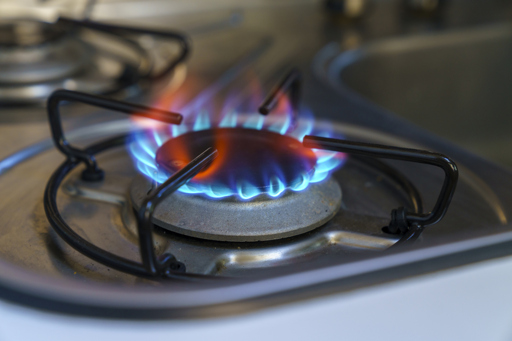
I don’t understand why gas stoves are still the default. When you step back and think about it its crazy that we still have an appliance which produces an open flame in our homes. Not to mention that it’s one of the most used things in the house (probably).
Once You get access to (pipes), it’s commonly way cheaper. Extra cheaper if You have old house, made with old tech that would be extra expensive to turn into electric heating.
If You have fair income, ok, go full electric, but for many who lives from check to check in many areas, the gas do matter.
The difference may be quite big if You live in country without fairly cheap nuclear energy, unsure i’d call green energy extra cheap. Then often mining lobby may do harm even to gov, to keep unclean and expensive energy as main source of any electricity.
Also is gas so default? Afaik, if some gonna build whole building, within new tech, it is more common to go full electricity, without any gas connection - many decide to skip getting pipes (save lots once), even if that would mean paying slightly more (per year, long term, but who knows future prices, for how long calculations).
Gas companies push gas stoves and dryers because once you have those comparatively low usage devices they can sell you on gas water heaters and furnaces which are the real money makers for them.
Also, a lot of older homes don’t have a high enough amperage on their electric service to power a bunch of 240V devices. But there’s no excuse for new builds outside of the local grid not being able to handle it.
Where in the world are they still the default?
Large cities, I know where I’m from is mostly gas and it’s only 300,000, Google says that “Densely populated urban states like New York, New Jersey, Illinois (including Chicago), and California report that roughly 60% to 70% of households use gas for cooking, compared to a national average of about 38%”
Oh, the US
They’re not really common in homes almost anywhere else in the world, tbf. I haven’t seen one in europe in decades.
The US are major exporters of LNG. It is cheap and effective in the US. When Europe was importing the majority of its gas, it makes sense they’d transition away when there’s other options available.
Everything is cost related. The cost of transitioning in the US doesn’t make sense. I have gas appliances, and it’d be silly to transition to electric.
Burning fossil fuels kills more than 250,000 people a year in the US. We know gas stoves contribute to that number by releasing measurable benzene (a known carcinogen). Please, tell us the cost of a human life. So that you can justify your comment that “it’d be silly to transition to electric.”
I appreciate what you’re saying. I see oil and gas deaths closer to 91,000, which is obviously too many, and it comes down to proper ventilation. Shit, I know I cook with windows open, and I know that was the norm when I was growing up, but mainly because it got hot af. And so, unfortunately, when you factor in the safety measures, the cost of transitioning 47 million homes to electric stoves becomes a burden.
And I don’t know what the cost of a human life is. I hear this “If you save one life” thing, and I’m not sure it means anything. I’ve heard people spout it at hearings for cell phone towers. In an ideal world we’ll achieve this perfection where nothing we do has any risk to anyone, but it’s not realistic. We will always find some way to kill ourselves.
That’s a lot of deflection and minimization of the issue. It’s WAY more than 91,000. Give the value of a human life. I dare you. Only then can you make an argument as to what is cost effective and what is not. BTW, throwing in the complete BS about cell phone towers makes you look like a complete buffoon.
Edit: Since you did no research other than asking AI how many people are killed/year by fossil fuels (and immediately went for the lowest estimate lol), I went ahead and did the work for you. AI gives the statistical value of a human life in the US between $13.1 million-$13.7 million. Multiple that by a few hundred thousand lives PER YEAR, and it makes your argument that “it would cost too much” pretty childish. Most Americans have been convinced by their corporate overlords (which includes the fossil fuel industry) that they don’t deserve any rights, and you are a perfect example. Be better.