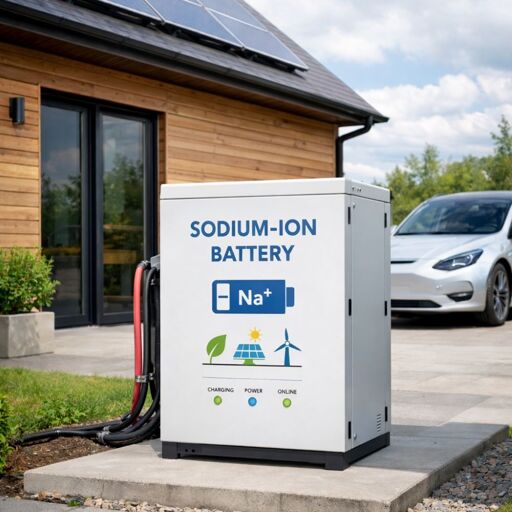
An international team of scientists has reviewed recent advances in sodium-ion battery components, highlighting their potential as a lower-cost, more sustainable alternative to lithium-ion batteries. The researchers identify key challenges including lower energy density, shorter cycle life and manufacturing constraints, while pointing to advances in materials and electrolytes as important to future commercialization.
Good Lithium-ion batteries have around 350 Wh/kg, so if you retrofit your devices, you’d be cutting out almost half the capacity, so at the moment it’s not feasible yet.
Once the form factor is there and the loading voltage is the same (or the charging circuit can be replaced), I don’t see why it shouldn’t work


Good Lithium-ion batteries have around 350 Wh/kg, so if you retrofit your devices, you’d be cutting out almost half the capacity, so at the moment it’s not feasible yet.
Once the form factor is there and the loading voltage is the same (or the charging circuit can be replaced), I don’t see why it shouldn’t work