An international team of scientists has reviewed recent advances in sodium-ion battery components, highlighting their potential as a lower-cost, more sustainable alternative to lithium-ion batteries. The researchers identify key challenges including lower energy density, shorter cycle life and manufacturing constraints, while pointing to advances in materials and electrolytes as important to future commercialization.
Not limited to large capacity, but to low-density applications where size isn’t critical. Also anywhere that very cold weather is likely
So no wearables, phones, etc… But more stationary applications.
But solar mesh nodes (home or agricultural/industrial), off-grid pumps, power banks (camping style), home solar storage, lead acid car battery replacements, weather stations, electric toothbrushes, lights/lanterns, light tools like laser levels, toys and RC cars/boats, etc… Things that traditionally used alkaline batteries (often recently switching to Lithium for recharging) are often good applications.


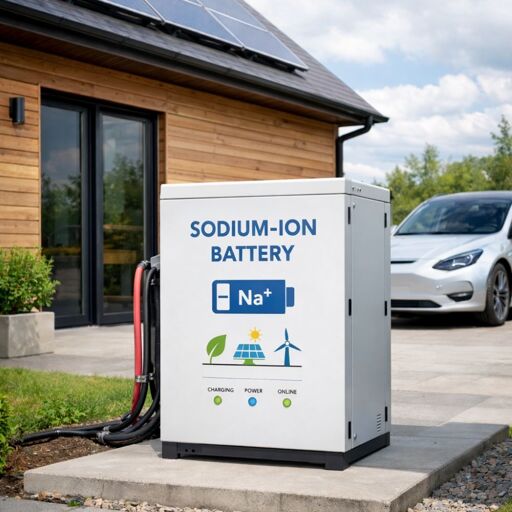
Not limited to large capacity, but to low-density applications where size isn’t critical. Also anywhere that very cold weather is likely
So no wearables, phones, etc… But more stationary applications.
But solar mesh nodes (home or agricultural/industrial), off-grid pumps, power banks (camping style), home solar storage, lead acid car battery replacements, weather stations, electric toothbrushes, lights/lanterns, light tools like laser levels, toys and RC cars/boats, etc… Things that traditionally used alkaline batteries (often recently switching to Lithium for recharging) are often good applications.