

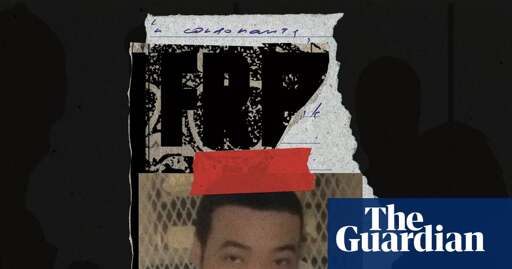
James Broadnax has been locked up in a 6ft-by-10ft cell on death row in Texas for more than 16 years, and in that time he has developed coping mechanisms for passing the long and desolate days.
A favourite technique is to write spoken word poetry at his cell desk. He becomes so engrossed in the creative process that he can lose himself for hours, transfixed in what he calls a “time gap”.
Broadnax is set to enter the execution chamber in Huntsville, Texas, on 30 April. He will be strapped to a gurney and injected with a lethal dose of pentobarbital – his life snuffed out in no small part because of the prosecutorial use, or misuse, of his poetry. In 2009, Broadnax, who is African American, was convicted along with his cousin of murdering two white men, Matthew Butler and Stephen Swan, during a robbery in Garland, Texas. He was found guilty by a jury from which Dallas county prosecutors had initially excluded all Black jurors, until the trial judge stepped in and reinstated one of them.
During the sentencing phase of Broadnax’s capital trial, prosecutors presented the jury with 40 pages of the defendant’s notebooks found in a suitcase after his arrest. The state carefully selected rap lyrics infused with violent images of murder, robbery and drugs, to make the case that Broadnax should be sentenced to death. Its lawyers skirted over lyrics addressing peaceful narratives such as redemption and love. For the ultimate punishment to be secured under Texas law, jurors would have to be persuaded that the defendant posed a threat of “future dangerousness”.
By leaning heavily on rap lyrics and racist dog whistles, Texas prosecutors managed to drown out mitigating evidence that might have spared Broadnax’s life. His defense lawyers emphasised that Broadnax was just 19 when the murders took place. He had endured an abusive childhood at the hands of a grandmother who locked him up in his room without food and frequently beat him. And despite such a traumatic background, he had no previous criminal record other than a single conviction for non-violent marijuana possession.
The jury was clearly less swayed by such details than by the prosecutors’ lurid invocation of the rap lyrics. Jurors asked to see the notebooks twice during their deliberations. Then they sent Broadnax to death row.
So by “rap lyrics”, they mean stuff he wrote himself?
Yup.
It wouldn’t be the first time a defendant’s writings were used against them. What is the indication that it was about them being ‘rap’? They were apparently in the form of free style poetry, not recorded or otherwise set to music.
It’s in the summary above and the article.
Yes, I read that about three times. What is it exactly that makes his writings “rap lyrics“?
Why are you so weirdly fixated on the “rap lyrics” part? All songs, including rap songs generally get written down on paper first and plenty of rap songs start out as “poetry” first.
The issue here isnt whether these were rap lyrics or poetry. The issue is that they prosecutor cherry picked artistic works to make the guy seem like some sort of animal that needs to be put to death. They’re misrepresenting facts in order to end a person’s life.
In every media source I’ve read about this the 40 pages are listed as having rap lyrics. Maybe that’s how the cops described it, or the prosecutors decided that’s what they’d label it to gain the death penalty.
The article initially describes it as “spoken word poetry”. I guess the thing is I’d have to see what he wrote and hear their alleged racist tropes to make a determination for myself, not just go with what the journalist alleges.
“id have to be on a confederate plantation myself to know if they were racist” type shit. Embarrassing.
Texas being racist ad legally murdering men of color is nothing new.
I have experienced enough journalism to know to not blindly believe what an article says. “Embarrassing” indeed.
No, it’s not in that summary. The summary calls them rap lyrics, but only states they came from a notebook. A rhyme on paper is poetry. Nothing in the article makes them truly rap lyrics. Nothing about recording or performing prior to arrest, just that he wanted to be a rapper. Yes, they were very likely it ended to be rap lyrics and were definitely interpreted as rap lyrics by the jury. It’s not exactly fair to call them rap lyrics because the article is playing up the racial inequality, but, at the same time, it really is important to highlight the differences on public opinion of poetry.
I could rap Emily Bronson. Seems like the media wants it to be “omg black and he’s a rapper and rap lyrics”. Sure, Texas fucking blows but if you’re already in prison for murdering someone, good luck.
Are you an expert on writing lyrics? Or poetry? Who decided that you have the last word on how lyrics can become part of a song or part of a poem?
Your arrogance is showing.
Yes, my #1 authority on what constitutes rap or poetry is The Guardian.
Fr poetry doesn’t have to rhyme or even have the same amount of syllables - bro probably wasn’t even a music student