

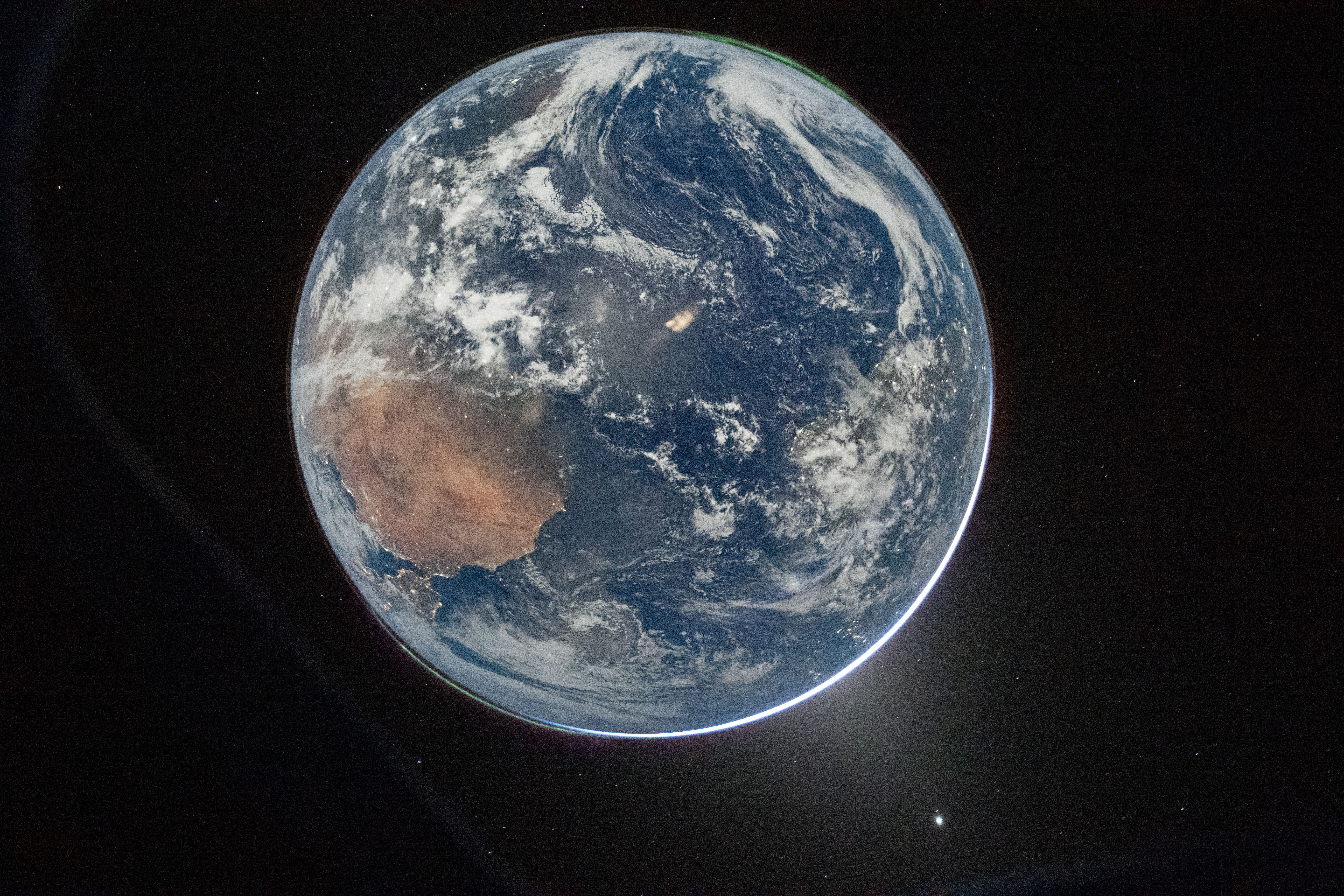
This image of home just came down from the Artemis II crew.
Taken after their translunar injection burn, there are aurorae at top right and lower left, and zodiacal light at lower right.
Credit: NASA/Reid Wiseman
// That’s home. That’s us.
-–
Alternative references of better image quality mentioned in comments by @baguette@piefed.social:
- https://images.nasa.gov/details/art002e000192;
- https://images-assets.nasa.gov/image/art002e000192/art002e000192~orig.jpg [5568 x 3712]
They left the EXIF data in the file, you can see the huge ISO. Really interesting lens also.
EDIT: I’ve now seen this is actually the night side, so it checks out.
This is full of interesting but slightly puzzling information.
First, it’s shot at 22mm, which is a pretty wide angle, so I guess they were still pretty close when they took it.
What’s really puzzling to me though, is why did they need to crank up the exposure so much?
We’re looking at 51k ISO @ f4, I can shoot in really dark places with this kind of ISO (but I don’t, because it looks like trash).
They seem to be shooting the day side of earth as far as I can tell, so I don’t really understand why they needed that much sensitivity, instinctively I would’ve assumed you’d only need the same kind of settings you’d use on daytime exteriors here on earth (so nowhere near that ISO).
It looks like the daytime side because the ISO is cranked up that high.
This is the nighttime side, only lit by reflected moonlight. The sun is behind earth on the bottom right.
They wanted to fire off that first shot as soon as all of earth fit in the window, instead of waiting 12 hours.
Yeah I realized that afterwards. At the end of the day moonlight is basically just sunlight but dimmer (also something you learn when trying to shoot night scenes), that’s why we can shoot “day for night” and it looks mostly correct.