Do we actually need a study to answer this given it’s basically a physics and mechanics question? The statistics on a given car/engine’s efficiency is published data if we want to work out hard numbers, but even just understanding the high level relationships kinda gives us the answer:
Firstly engines are generally more efficient the slower you run them, so you’re just gonna use less fuel anyway. Aerodynamic drag also affects anything that moves and the more something moves, the more drag it experiences.
Then you have acceleration which is also where a good percentage gets burnt, getting up to 30 from zero is going to burn through more fuel than zero to 20. Stop-start traffic would exacerbate losses here at the higher limit. Finally, limits are all day round, stop-start traffic is really only a major factor around rush hours.
Basically it’s kinda mathematically impossible for 20 to not be more fuel efficient than 30 in any normal situation.
(And we’ve not even talked about all the pollution reduction and health benefits we get from cars running slower around people)
For the level of significance, yes. The speed component of energy consumption is huge at highway speeds, but moderate at 30mph, because of the growth rate of air resistance with respect to speed. The relatively smaller contribution at lower speeds means that losses due to gearing can negate most of the benefit.
This is because while the vehicle is going slower and so incurring lower resistive losses, in an ICE car you’ll be in a lower gear, so the engine will be turning over at a similar speed, or perhaps even higher, incurring similar or higher resistive losses. These losses are a greater relative component of the total energy consumption at low speed than at high speed. (And at high speed you will not need to gear down when reducing your speed, so decreased speed will pretty much always result in a proportionally lower engine speed)
This is exactly why (in my opinion) my personal fuel consumption went up. 20 is too slow for 3rd, so I’m stuck at higher rpm in 2nd (or going at 25 and idling in 3rd)
Throw in the hills of Sheffield, and I’m driving around having to rev the balls off in 2nd, or labour the fuck out of it and kill it trying to do it in 3rd.
Less of an issue if your car is an oversized wanktank, like most. See, the bigger problem is the American influence on our vehicles; stupidly large, unnecessarily heavy, consuming more fuel to move, and doing more damage to roads and whatever mommy hits between the house in suburbia and little fucking Timmy’s football practice half a mile up the road.
Tax vehicles by a multiplicative factor of physical size, weight, and engine displacement, with a reduction for electric powertrain, or part thereof, and watch the gormless SUV craze end in a fucking hurry.
Historically it was a well known stated thing that 56mph was the sweet spot between the gearing, engine speed and air resistance. Going slower means lugging the engine if you over-gear and is less efficient because covering less ground for the engine speed, therefore fuel burnt. 20mph will not save fuel. Electric cars will maybe get better range, but they may not, because every motor has a design efficiency for a certain rpm and the designed gearing to the roadspeed from the manufacturer.


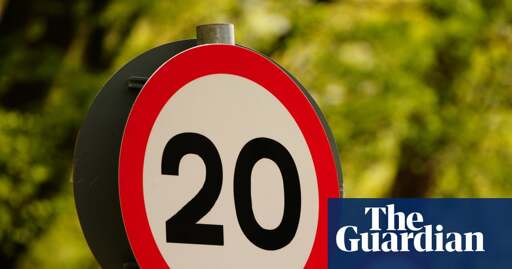
Do we actually need a study to answer this given it’s basically a physics and mechanics question? The statistics on a given car/engine’s efficiency is published data if we want to work out hard numbers, but even just understanding the high level relationships kinda gives us the answer:
Firstly engines are generally more efficient the slower you run them, so you’re just gonna use less fuel anyway. Aerodynamic drag also affects anything that moves and the more something moves, the more drag it experiences.
Then you have acceleration which is also where a good percentage gets burnt, getting up to 30 from zero is going to burn through more fuel than zero to 20. Stop-start traffic would exacerbate losses here at the higher limit. Finally, limits are all day round, stop-start traffic is really only a major factor around rush hours.
Basically it’s kinda mathematically impossible for 20 to not be more fuel efficient than 30 in any normal situation.
(And we’ve not even talked about all the pollution reduction and health benefits we get from cars running slower around people)
For the level of significance, yes. The speed component of energy consumption is huge at highway speeds, but moderate at 30mph, because of the growth rate of air resistance with respect to speed. The relatively smaller contribution at lower speeds means that losses due to gearing can negate most of the benefit.
This is because while the vehicle is going slower and so incurring lower resistive losses, in an ICE car you’ll be in a lower gear, so the engine will be turning over at a similar speed, or perhaps even higher, incurring similar or higher resistive losses. These losses are a greater relative component of the total energy consumption at low speed than at high speed. (And at high speed you will not need to gear down when reducing your speed, so decreased speed will pretty much always result in a proportionally lower engine speed)
It could be down to gearing? You could, for example, be sat at 2000rpm at 20 in 3rd, or 1500rpm at 30 in 4th. But this is very vehicle dependent.
This is exactly why (in my opinion) my personal fuel consumption went up. 20 is too slow for 3rd, so I’m stuck at higher rpm in 2nd (or going at 25 and idling in 3rd)
Throw in the hills of Sheffield, and I’m driving around having to rev the balls off in 2nd, or labour the fuck out of it and kill it trying to do it in 3rd.
Less of an issue if your car is an oversized wanktank, like most. See, the bigger problem is the American influence on our vehicles; stupidly large, unnecessarily heavy, consuming more fuel to move, and doing more damage to roads and whatever mommy hits between the house in suburbia and little fucking Timmy’s football practice half a mile up the road.
Tax vehicles by a multiplicative factor of physical size, weight, and engine displacement, with a reduction for electric powertrain, or part thereof, and watch the gormless SUV craze end in a fucking hurry.
Historically it was a well known stated thing that 56mph was the sweet spot between the gearing, engine speed and air resistance. Going slower means lugging the engine if you over-gear and is less efficient because covering less ground for the engine speed, therefore fuel burnt. 20mph will not save fuel. Electric cars will maybe get better range, but they may not, because every motor has a design efficiency for a certain rpm and the designed gearing to the roadspeed from the manufacturer.