

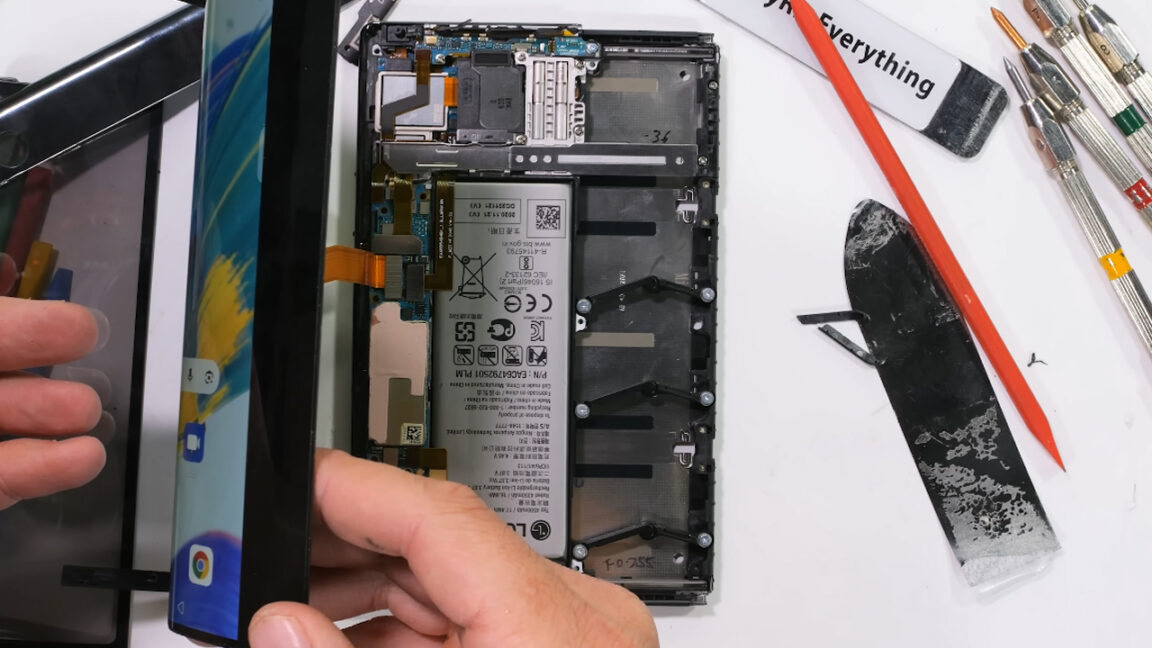
LG almost released a rollable smartphone in 2021, and this is what it looked like inside.
Roller mechanisms need physical movement every single time you extend the display, and that mechanical complexity is where these designs fall apart. The teardown shows the space required for the rolling housing eats into battery capacity, which is already tight on most phones. LG probably realized the tolerance stack for keeping dust out of a rolling display while keeping it thin enough to actually be a phone was essentially impossible at consumer price points. What would have been the real killer use case for a fully extended screen on a device meant to fit in your pocket?
But it doesn’t show that.
Rollable displays always seemed like a solution looking for a problem compared to foldables. The engineering complexity for a marginally different form factor never made sense for mass production. LG getting out of mobile before shipping this was probably the right call.
Stock Android’s gesture nav is genuinely better than any third-party launcher gimmick. Google actually spent time on the physics and snap points. Most ‘improvements’ I’ve tried just add latency and inconsistency for no real gain.