

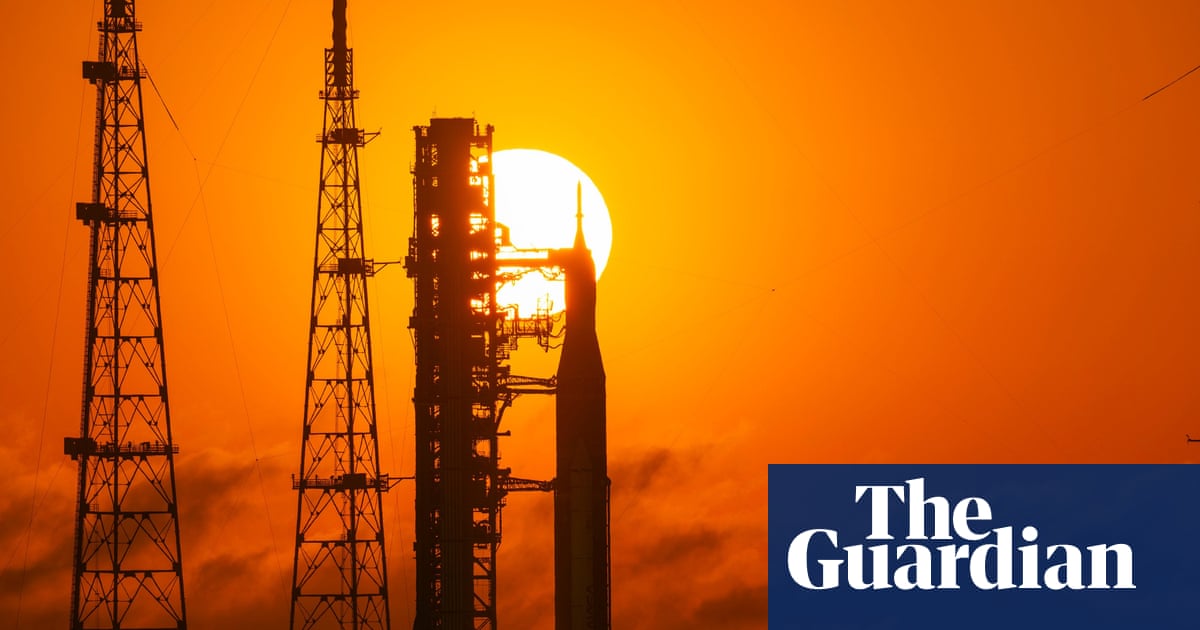
Almost six decades have passed since the space coast of Florida experienced an atmosphere quite like this. On its beaches and in cities, there is an air of anticipation, excitement and anxiety to match the final days of Nasa’s storied Apollo moon program.
At 6.24pm ET on Wednesday at Cape Canaveral, subject to adverse weather and last-minute technical hitches, four Artemis II astronauts – three Americans and one Canadian – will become the first humans to blast off on a journey to the moon since 1972.
It will be a moment steeped in deep symbolism, given the rich history of America’s space port and its generations of Nasa engineers, rocket scientists and visionaries who paved the way for this new adventure to the stars. It will also be a solid step forward for the space agency’s newly announced ambition to build a permanent lunar base from which it plans future missions to Mars.
Beyond that, however, the liftoff will represent a celebration, not only for the achievement of finally dispatching humans back to the moon after years of delays and budget overruns in the Artemis program, but for the culmination and confirmation of a more local renaissance 15 years in the making.
In 2011, after Nasa’s 30-year space shuttle program was abandoned, the space coast was a region in steep decline. Thousands of workers at the Kennedy Space Center (KSC) lost their jobs, property prices collapsed, businesses folded and the local economy fell into a black hole.
I just wish SLS wasn’t such a compromised project from the start. Sure it’ll be kinda cool to see, but its just the least innovative rocket possible. If only some of spacex’s contract budget could’ve gone to funding NASA instead 😔
But who would blow up all those rockets?