

0·
13 days ago2% of a football field tall

Born to Squint, Forced to See ⚜️
2% of a football field tall

Unions are funded by employee dues. Its fairly easy to work around that idea by simply closing a store and waiting until the regional union quickly folds from lack of funding.
What unions really need is to be large enough to weather an individual store being closed and losing those employee dues. Unionizing one location or an insignificant amount of locations is not effective. Collective bargaining doesnt work when the collective that is bargaining hardly has numbers.
Thats why in traditional trades you see locals of electrical workers, plumbers, etc. You dont see “Bob’s Plumbing Co. Workers Union”. Its not effective. The same is true for general service jobs. Starbucks workers union or Apple employees union is too narrow of a segment to meaningfully survive. Las Vegas has successful hospitality unions because there are a shitload of hotels, and therefore a shitload of hotel workers banded together. If you just had “MGM employees union” or “Holiday Inn Worker’s United” they would have folded like a house of cards
Regionality is great when the union has a wide tent. Without a wide tent its not a solution. Local 5XX whatever have you of a specific trade is a union that works because no matter where that union employee goes for work they are backed by the union

Its amazing that since then we haven’t had much or any success in even landing anything unmanned on the moon, let alone manned. The fact that they weren’t ripped to shreds like pretty much everything else we ever tried to land, using that era’s technology, is absolutely fucking bonkers

Hopefully Noem is available, Ive heard the one thing shes good at is putting down sick puppies
Im a big fan of doing small amounts, but sometimes it definitely gets you feeling like

1-8-5-0-5 dash 7-4-2-7
Neighborhood pride
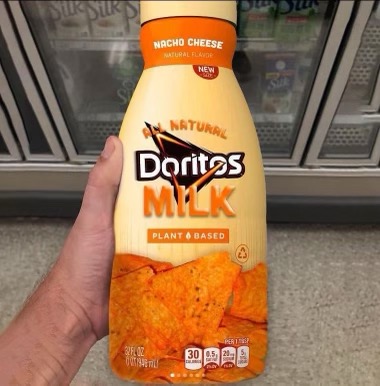
In the criminal justice system, food based offenses are considered especially heinous. In New York City, the dedicated detectives who investigate these vicious felonies are members of an elite squad known as the Culinary Victims Unit. These are their stories…

Nevada is also the most mountainous US state in terms of the amount of mountain ridges / elevation changes, but that does not mean that the mountains are particularly tall. They have no 14ers, unlike Colorado, but less flat area overall
When asked about the defense’s characterization of the ATF report, Christopher D. Ballard, a spokesperson for the Utah County Attorney’s Office, told USA TODAY ethical rules prohibit him from speaking publicly about forensic testing and test results.
“But I can say generally that when the results of a bullet fragment analysis come back as inconclusive, that means only that the fragment did not contain enough detail for the examiner to determine whether the characteristics on the fragment were consistent with having been fired by a particular firearm,” Ballard said.
Per USA Today article on the same topic

You might look into people attempting to clone the production beer called Mango Cart and see what theyre doing. Mango Cart is fantastic and tastes more like actual mango juice than it tastes like any kind of beer whatsoever. It has no pulp but it also isnt clear

Theres a lot of misunderstanding going on here about both corn and solar power.
Corn is not something that requires ideal or fertile real estate. People imagine corn being grown in the stereotypical midwestern river-adjacent and particularly fertile type of places, like Iowa or Ohio or whatever. The reality is that modern corn production requires a shitload of artificial nitrogen fertilization, so the actual fertility of the land is virtually unimportant. Believe it or not, Texas is actually one of the most productive places for corn farming, and in particularly hot and arid areas where you wouldnt be farming much else. More like typical ranching land, not prime farming land.
Now with solar power, at the current levels of efficiency (and unlike corn), having a cloudy day is a major killer. UV intensity at high elevation can be virtually nothing when it gets a little cloudy. Whereas on a sunny say it would be extremely high. So you need ideally somewhere that is as high altitude as possible, but where it is also sunny almost all the time. There are not a lot of places that meet that description, and even the few places that do are largely very expensive to acquire land in because people want to build houses and hotels and golf courses and whatever else in (or adjacent to) the mountains. Take Pueblo, CO, for example. It’s one of the solar hubs of the US. But its difficult to expand from there because you can either go east, down in elevation, and increase the number of cloudy days. Or you can try to go west and everything becomes exponentially more expensive the closer you get to the Rockies.
More importantly though, corn and solar production necessitate two completely different environments. No one is growing corn in Pueblo, and you wont find many solar fields in places where corn is grown effectively. Because a lot of the time people grow corn where it rains often, therefore those places have many more cloudy days in a year. Realistically you cant just take corn fields and turn them into solar fields


I believe only Delta has said they will eventually use that kind of pricing, but I dont think they actually started yet. Ive tried checking the price of airline tickets on different devices that are both mine or not mine, and the prices are always the same whether they know its me or not.
The only thing “dynamic” about airline ticket pricing is that it changes over time, but that is not personalized pricing where people get charged different amounts at the same time. The article is conflating those two things