
0·
14 hours agoOpinions vary (naturally), but I think it’s pretty darned good.
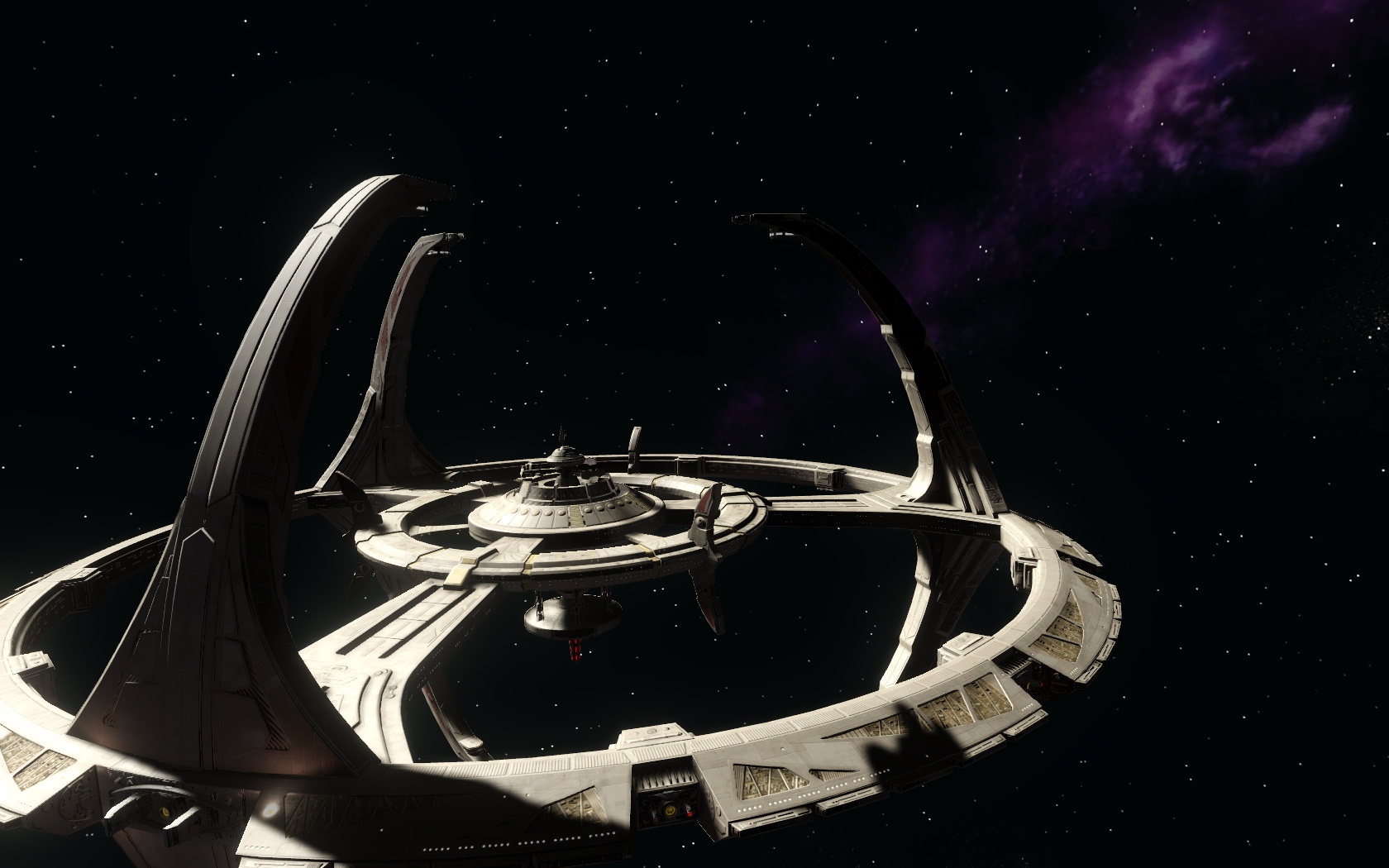
Have you ever considered that the Prime Directive is not only not ethical, but also illogical, and perhaps morally indefensible?
Opinions vary (naturally), but I think it’s pretty darned good.

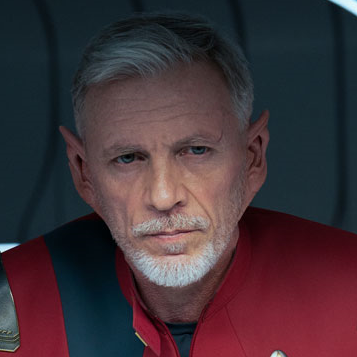
Connor Who-lebuyk?

But they love conspiracy theories! What a conundrum!
Yeah, the episode goes out of its way to establish that both families are very well-intentioned.
somehow, there doesn’t appear to be a legal system with a metal sphere gavel and the social worker from Mrs Doubtfire presiding just yet
The adoptive and biological parents couldn’t decide on which planet’s law should apply, and mutually agreed to Sisko as a mediator. Which seems questionable, but at least they addressed it, I suppose.
And yeah, there are no winners here, but all other things being equal, it probably should be policy to return children to their birth families.
It’s in a weird spot - they picked it up for a second season very early on, but then cancelled it. So we’re in this weird position of knowing there’s another season coming, but also that it will be the last one.
The cast and showrunners of Starfleet Academy.
There are dozens of us!
Considering the previous, rejected pitch was made by writers from the 90s-2000s era, I wouldn’t get my hopes up on a lot of continuity, if any.
We’re all one step closer to the Rick Berman action figure that we’re really clamouring for.
Larry Nemecek has a bit more info on his own website.
I have no idea what the situation is, but I’m glad they’re (a) still planning to air the second season, and (b) are willing to promote it.
It was picked up very early for Season 2, which has yet to air, and then cancelled.
Looking at the website, there are a couple of Trek-related things TrekCore didn’t mention:
Star Trek: The Future is Queer
Thu, Oct 8, 2026
4:15 PM - 5:15 PM
Room 1C02 Pride Lounge
Join Geeks OUT as they look to the hopeful future that is Star Trek, and the exploration of queer characters in Star Trek comics, movies, and TV.
Inside Jim Henson’s Creature Shop (maybe Trek-related?)
Fri, Oct 9, 2026
12:45 PM - 1:30 PM
North-Room 408
For the first time ever, Jim Henson’s Creature Shop has opened its doors to the public for tours, encouraging everyone to be inspired by the art of puppetry, the craft of puppet building, and the legacy of Jim Henson. Join the New York Creature Shop’s Creative Supervisor Jason Weber, the Shop Director Melissa Crichton, and puppeteers and builders from the Shop’s newly launched tour as they talk about the history of this iconic must-see hub of imagination. The panel will also share a peek into the Shop’s exclusive location and answer the burning puppet-building questions we all have: How does a monster eat all those cookies? How does a Fraggle swim in a pond? And many more!
Titmouse - We Make Cartoons: Spotlight Panel
Fri, Oct 9, 2026
5:45 PM - 6:30 PM
North-Room 406.1
Join Titmouse founder Chris Prynoski, COO Ben Kalina, Art Director Niko Guardia (Kiff, Metalocalypse), voice actress and cartoonist Kate Micucci (Garfunkel & Oates, Motorcity), and SVP Creative Director of Emerging Media, James Stephenson (Meow Wolf) for a lively and immersive discussion pertaining to all things Titmouse. Discover how what started as a small t-shirt company operating out of a basement is now a multi-faceted creative studio that produces cartoons, games, apparel, art shows, local experiences, screenings, and even a live action series.
Star Trek Fan Meetup!
Sat, Oct 10, 2026
1:00 PM - 1:45 PM
South Concourse Cosplay Meetups
Come dressed as your favorite Star Trek character, show off your best uniform, or simply stop by to meet fellow Trekkies and cosplayers. All Star Trek series, eras, and characters are welcome! While cosplay is highly encouraged, it’s never required.
It doesn’t really make a lot of sense to run multiple streamers. It’s kind of wild that Disney is still keeping Hulu alive, despite a heavy degree of integration.
It’s a pretty big project, though - could take years.
Voyager: “Nemesis”
This is actually a very interesting pick - I tend to think it’s a mistake to try to start someone on an episode that would be considered among “the best,” since after that there’s nowhere to go but down. “Nemesis” fits the bill of something that’s reasonably interesting without being spectacular.
I’m very bad at answering the core question, but I think the beauty of the franchise is that it has a little of everything to offer, and you can tailor recommendations to the person’s tastes.
Do they like medical dramas? Procedural mysteries? Musicals? Gritty war stories? There’s something in there for everyone.

found that it did
How so?
Every one commits treason who, in Canada,
- uses force or violence for the purpose of overthrowing the government of Canada or a province;
Not so far…
- without lawful authority, communicates or makes available to an agent of a state other than Canada, military or scientific information or any sketch, plan, model, article, note or document of a military or scientific character that he knows or ought to know may be used by that state for a purpose prejudicial to the safety or defence of Canada;
Maybe? I don’t see military or scientific secrets being described here, but I’m open to the possiblity if there’s any evidence.
- conspires with any person to commit high treason or to do anything mentioned in paragraph (a);
Again, not so far.
- forms an intention to do anything that is high treason or that is mentioned in paragraph (a) and manifests that intention by an overt act; or
Again, not so far.
- conspires with any person to do anything mentioned in paragraph (b) or forms an intention to do anything mentioned in paragraph (b) and manifests that intention by an overt act.
And that’s another maybe, but I don’t see anything in this article that screams “military or scientific secrets.”
No matter how much people may want to portray this most recent era as a failure, I don’t think there’s any sort of data that would back that up (but if there is, I’d love to see it). This is from early last year:
Parrot Analytics Streaming Economics System shows how the long running Star Trek franchise has been a reliable money maker not only for Paramount+ but other streaming platforms around the globe. From Q1 2020 until Q3 2024 our model estimates that shows and movies in the Star Trek franchise have generated over $2.6B in subscriber revenue for major streamers globally.

You could sort of, probably make the case that the landscape has changed since then - the fact that there are no live-action series in development would certainly support that, though I don’t think it really proves anything other than that the company is in shambles right now.
But the idea that the franchise has somehow been killed in the streaming era? It’s essentially fantasy.
Alex Kurtzman single-handedly drove the entire Paramount corporation into the ground, keeping his job the entire time, personally enabling Skydance to purchase the entire thing for the low price of $8 billion?
This to you is a sensible theory, and not mind-numbingly stupid?






Are they comfortable?