

2·
1 month ago@ndupont Friend, you won’t need the documentation in case you die. You’ll need it because you will forget (like me) what you did and why.
Retired #AI #robotics chief #scientist, ex- #NASA #JPL, gov’t exec, entrepreneur. I frequently reply to posts about US politics, climate, high tech and weird stuff. I collect antique ethnographic edged-weapons.
The Edge: There is no honest way to explain it because the only people who really know where it is are the ones who have gone over. - Hunter S. Thompson
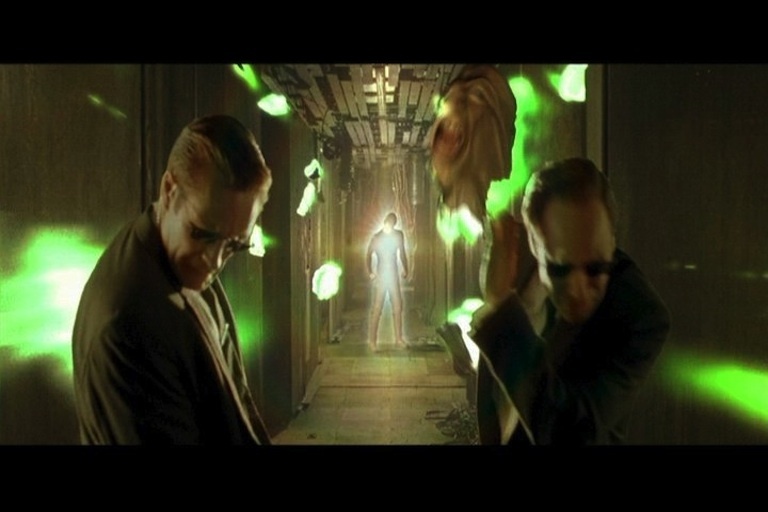
Banner: a screen grab from “The Matrix” when Neo finally realizes his power and confronts Smith. You can do this too!
@ndupont Friend, you won’t need the documentation in case you die. You’ll need it because you will forget (like me) what you did and why.
@ndupont Stickers, yes. Colored sticks. I put little stickers all over the computers. Most stickers have mundane details (like host name, Subnet, etc.) but I also use a sticker for each major service. Everything else is documented in notebooks or spreadsheets. It’s probably overkill, but, between my memory and the home-grown gradual evolution of my #homelab, stickers really useful. I have 9 or so computers (rack-mounted), more controllers spread around (e.g., ESP32s running WLED, Pi Zeros), and nearly 250 individual devices for #homeautomation. I’m trying to learn about FOSS for configuration control but that’s slow going.
@luftruessel @selfhosted I put in Lutron fan switches. Pricy, but work great and integrate easily with #homeassistant via Zigbee.
@DarrinBrunner That might have something to do with your TV’s standby status and settings. For example, “Wake-on-LAN” is not always available, nor are some network interfaces, including BT.
@festus @selfhosted Excellent examples. What the tag [AI] conveys is not what you really need to know, which is the quality of the code (component/unit), unit testing, and so forth. I assume there is some acceptance testing done at the project level. The human who submits the code must understand that flaws in their code is their responsibility, just as those who contribute/maintain the project are responsible at the system level. It is both an objective and reputational process. Does it really matter what tools are used if the work product passes the test, verification and validation criteria? Sloppy code is not unique to AI tools.
@irmadlad This is such a great idea. I sometimes tell my rack, “you are my everything” and I give it whatever it wants. I’m about to reposition some of the equipment. That is plenty intimate enough to play Barry White.
@Zeoic You are both correct. Chess was chosen as an early problem domain for work on first-order logic-based programming. That certainly was considered AI. People really interested in chess later abandoned logic programming in favor of brute-force, highly parallel special purpose hardware. That was not AI.
“Expert systems” (I hate that term) are application area of “Pattern-Directed Inference Systems” (PDIS). Rule-based systems are just one type of PDIS. For example, “Constraint Satisfaction” is another powerful AI technique often used in resource optimization and scheduling systems.
@mko I have one. Lots of fun. Made with a Raspberry Pi 0. Lots of plans online. It sits on my windowsill. Tiny! It feeds those two commercial flight tracking sites as well as others. Here is a link to the software for web interface to your ADSB receiver.
@guynamedzero Bulletin Board System (BBS)
@fccview I wasn’t really joking. I was hearing it.
@fccview Vroom! Power tools!
That gives me an idea.You know what a grinder sounds like, and a drill, and a chainsaw. Why don’t OUR power tools have a distinctive sound? Or the code itself? It would be faster to hear a card deck shuffled, in various ways, and know an algorithm is, than to read the documentation or the source code.
Source code = math = music. We could probably pick out AI Slop instantly.
@Darkassassin07 Looks very useful. Also timely for me. I have a use case that requires multiple synched pi-holes. 👍🏼