Glad I’m stocked on memory cards that should last me for a while.
There is, however, a bigger problem that’s not addressed - manufacturers seemingly only playing nice to big corporations while screwing the end customer.
Manufacturers only have a limited capacity of production and want to make money. It’s a much better business to sell all your production’s capability for a few months to one customer for a fixed price, instead of selling to thousands of small customers for a highly volatile price. In the worst case you produce stuff, you can’t sell or have to sell at a loss. A factory standing still and not producing is also expensive.
A factory with all machines running, all people working, all product selling at a good price is the ideal state for a manufacturer to be in.
Big customers bring stability and predictable profits.
Production capacity for in demand products will increase over time. Likely these same manufacturers‘ profits will be invested in more production capacity, optimizations, cost savings, etc.
In a few years this will result in cheaper and available consumer products.
General purpose computers have been fast enough and had enough memory for a decade now. I bought a quad core (8 threads) laptop with 16 GB of RAM and a 1 TB SSD, 2 GB VRAM twelve years ago. Around the same time I built a NAS with an HP Gen8 microserver, also with 16 GB of RAM for ZFS. That one I recently upgraded with a better CPU for 20 €. Both of these machines still perform really well for most tasks. I haven’t upgraded my phone in 5 years, and my tablet in 8 years. These start to show their age because of the small amount of RAM built in. Last week I bought high end EIZO monitors from 8 years ago for 50 €. These are fine!
Ask yourself, are you even doing things that are limited by your hardware? If you are limited by hardware, could buying a last generation high end machine fill your needs? If you need vast amounts of computing power, renting cloud computing might be a solution as well.
If you actually make serious money with your work computer, then paying 8k for a machine will pay for itself over a few months.
A lot of people seem to think I’m we’re crazy for not getting a new phone every year or two. Previous one lasted 7 years, this one is at a bit over 5 years… It’s fine.
True enough, my previous phone I kept until my banking app stopped working (my very, very old version of android was no longer supported) and my current phone is from 2019. I don’t think people need new phones/tablets/computers every year.
However… eventually I’m going to be needing a new computer. My desktop is about 6 years old now. And if it broke down right now, I don’t even know if I could afford to build a new one, unless I build one that’s worse than the one I currently own - and probably way more expensive than it was years ago (the RAM price alone is insane already).
And my phone won’t last another 6 years either. Although, who knows, it might. It seems indestructible so far, lol.
I’ve been dreading the new computer as well. I built the original incarnation of my current one in … holy shit, late 2013. I was thinking 2016 but I just looked up the order and it was 2013. I did it pretty damn “top of the line” because I wanted it to last ages. I have occasionally upgraded or replaced drives, GPU, RAM, power supply, but I’m still on the original board+CPU.
It’s still great… running Linux and occasionally gaming.
Wow, yours is a bit older than mine. Hopefully mine will keep functioning that long as well! I don’t honestly think it’ll break down any day now, but you never know. Things are known to happen, and when they do happen it’s always at the most inconvenient of times! Also, my computer is very heavily used, every day. Lots of games too.
I was surprised about my phone. I don’t even know how many times I dropped it already and the battery is still good enough to survive an entire day. Truly, I dread getting a new one. I always hate having to figure out the settings, downloading and installing every thing, and configuring the thing exactly the way I want to. If it were up to me I’d keep using the same one forever, but I doubt even my stubborn phone will outlast me. ;)
It’s mask off time for capitalism. Business to person sales are no longer lucrative. All the money is in company to company now. See AI companies buying out entire present and future stock of PC parts until 2030. Regular people are no longer needed in this form of society. That’s why the market goes up while job numbers and employment go down. The economy can now support itself without anyone else.
Except that it seems a lot of these trades are on-paper, and not involving the actual transfer of goods. The data centres aren’t getting built. The servers aren’t going in them. The power isn’t being supplied. The tokens are not being generated. At least… It’s only a fraction of what they are all saying.
Yes but who actually cares? If society tolerates no actual real physical transfer of goods and leaves it all speculative, it doesn’t matter. The deals are made, financial institutions accept this, realistically it doesn’t matter that none of this is “real”. If society decides that it’s real, it’s real. Just like how paper money has zero real tangible worth. It’s all an agreed upon concept. The same is happening here.
The economy we had for the last handful of decades is gone. Speculative economy where only the top percentage trades with itself is where we are at and where we will stay.
It can’t be completely circular. There is an end customer that will expect something for their money eventually. Right now it’s driven by huge amounts of debt, but you can’t be on that forever. At some point it unwinds
It seems that end point is government bailing out banks using taxes, and people are paying more for the same due to inflation, while their salaries do not catch up with the cost of living.
The rationale for bail out the banks previously was that the retail arms (what you and I use) were so intertwined with the commercial arms that allowing the commercial part to fail caused the loss of everyone’s money. Regulation was introduced (at least in the UK. I don’t know about elsewhere) that ring fenced the two from each other, making future bailouts unnecessary. The commercial arm would shoulder the risk of its own investments.
Doesn’t stop corrupt politicians bailing them out though.


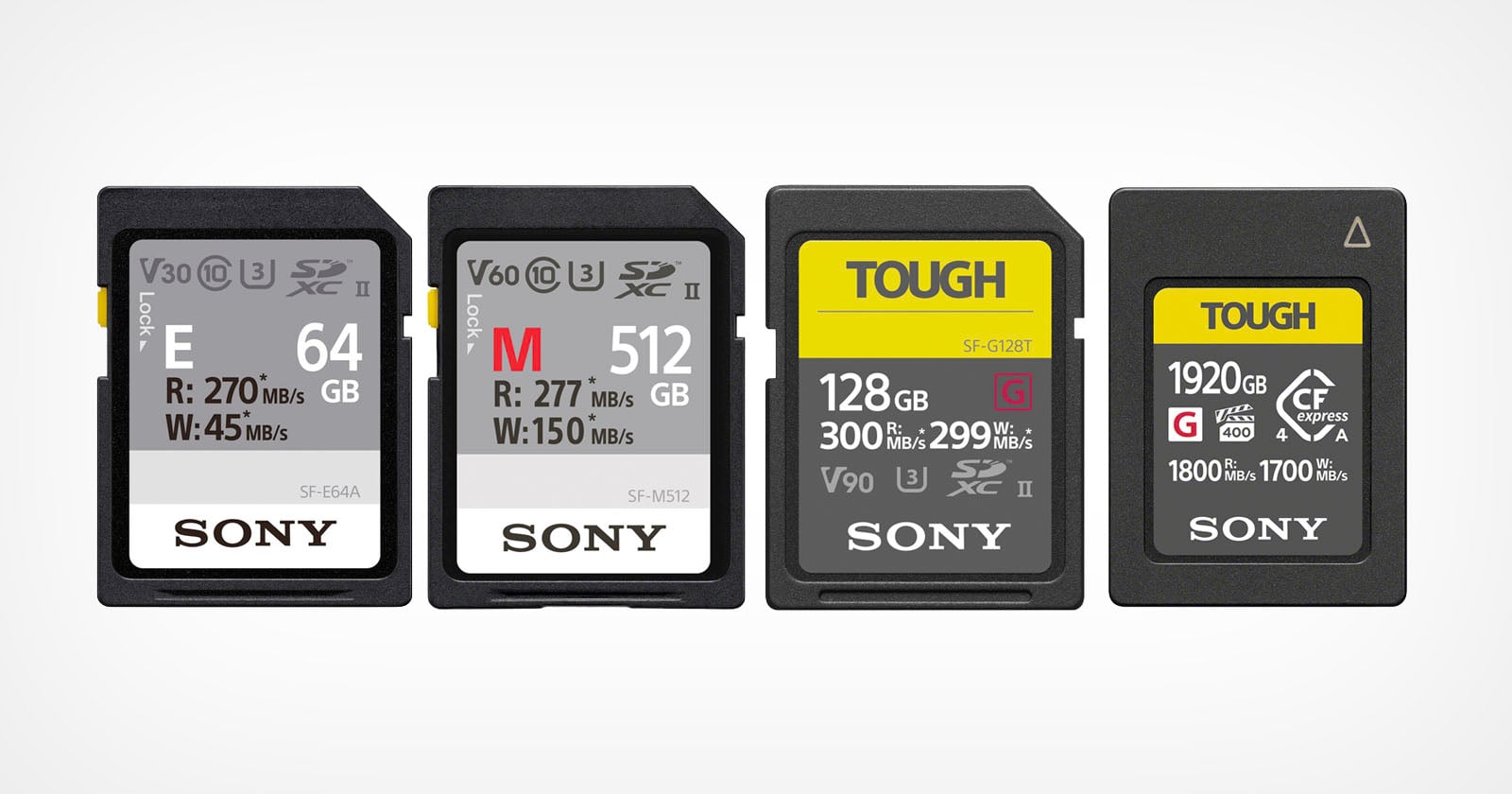
Glad I’m stocked on memory cards that should last me for a while.
There is, however, a bigger problem that’s not addressed - manufacturers seemingly only playing nice to big corporations while screwing the end customer.
Manufacturers only have a limited capacity of production and want to make money. It’s a much better business to sell all your production’s capability for a few months to one customer for a fixed price, instead of selling to thousands of small customers for a highly volatile price. In the worst case you produce stuff, you can’t sell or have to sell at a loss. A factory standing still and not producing is also expensive.
A factory with all machines running, all people working, all product selling at a good price is the ideal state for a manufacturer to be in.
Big customers bring stability and predictable profits.
Production capacity for in demand products will increase over time. Likely these same manufacturers‘ profits will be invested in more production capacity, optimizations, cost savings, etc.
In a few years this will result in cheaper and available consumer products.
General purpose computers have been fast enough and had enough memory for a decade now. I bought a quad core (8 threads) laptop with 16 GB of RAM and a 1 TB SSD, 2 GB VRAM twelve years ago. Around the same time I built a NAS with an HP Gen8 microserver, also with 16 GB of RAM for ZFS. That one I recently upgraded with a better CPU for 20 €. Both of these machines still perform really well for most tasks. I haven’t upgraded my phone in 5 years, and my tablet in 8 years. These start to show their age because of the small amount of RAM built in. Last week I bought high end EIZO monitors from 8 years ago for 50 €. These are fine!
Ask yourself, are you even doing things that are limited by your hardware? If you are limited by hardware, could buying a last generation high end machine fill your needs? If you need vast amounts of computing power, renting cloud computing might be a solution as well.
If you actually make serious money with your work computer, then paying 8k for a machine will pay for itself over a few months.
A lot of people seem to think
I’mwe’re crazy for not getting a new phone every year or two. Previous one lasted 7 years, this one is at a bit over 5 years… It’s fine.True enough, my previous phone I kept until my banking app stopped working (my very, very old version of android was no longer supported) and my current phone is from 2019. I don’t think people need new phones/tablets/computers every year.
However… eventually I’m going to be needing a new computer. My desktop is about 6 years old now. And if it broke down right now, I don’t even know if I could afford to build a new one, unless I build one that’s worse than the one I currently own - and probably way more expensive than it was years ago (the RAM price alone is insane already).
And my phone won’t last another 6 years either. Although, who knows, it might. It seems indestructible so far, lol.
I’ve been dreading the new computer as well. I built the original incarnation of my current one in … holy shit, late 2013. I was thinking 2016 but I just looked up the order and it was 2013. I did it pretty damn “top of the line” because I wanted it to last ages. I have occasionally upgraded or replaced drives, GPU, RAM, power supply, but I’m still on the original board+CPU.
It’s still great… running Linux and occasionally gaming.
Wow, yours is a bit older than mine. Hopefully mine will keep functioning that long as well! I don’t honestly think it’ll break down any day now, but you never know. Things are known to happen, and when they do happen it’s always at the most inconvenient of times! Also, my computer is very heavily used, every day. Lots of games too.
I was surprised about my phone. I don’t even know how many times I dropped it already and the battery is still good enough to survive an entire day. Truly, I dread getting a new one. I always hate having to figure out the settings, downloading and installing every thing, and configuring the thing exactly the way I want to. If it were up to me I’d keep using the same one forever, but I doubt even my stubborn phone will outlast me. ;)
It’s mask off time for capitalism. Business to person sales are no longer lucrative. All the money is in company to company now. See AI companies buying out entire present and future stock of PC parts until 2030. Regular people are no longer needed in this form of society. That’s why the market goes up while job numbers and employment go down. The economy can now support itself without anyone else.
Except that it seems a lot of these trades are on-paper, and not involving the actual transfer of goods. The data centres aren’t getting built. The servers aren’t going in them. The power isn’t being supplied. The tokens are not being generated. At least… It’s only a fraction of what they are all saying.
Some auditor is going to have a field day.
Yes but who actually cares? If society tolerates no actual real physical transfer of goods and leaves it all speculative, it doesn’t matter. The deals are made, financial institutions accept this, realistically it doesn’t matter that none of this is “real”. If society decides that it’s real, it’s real. Just like how paper money has zero real tangible worth. It’s all an agreed upon concept. The same is happening here.
The economy we had for the last handful of decades is gone. Speculative economy where only the top percentage trades with itself is where we are at and where we will stay.
It can’t be completely circular. There is an end customer that will expect something for their money eventually. Right now it’s driven by huge amounts of debt, but you can’t be on that forever. At some point it unwinds
It seems that end point is government bailing out banks using taxes, and people are paying more for the same due to inflation, while their salaries do not catch up with the cost of living.
This seemingly happens in US right now.
The rationale for bail out the banks previously was that the retail arms (what you and I use) were so intertwined with the commercial arms that allowing the commercial part to fail caused the loss of everyone’s money. Regulation was introduced (at least in the UK. I don’t know about elsewhere) that ring fenced the two from each other, making future bailouts unnecessary. The commercial arm would shoulder the risk of its own investments.
Doesn’t stop corrupt politicians bailing them out though.