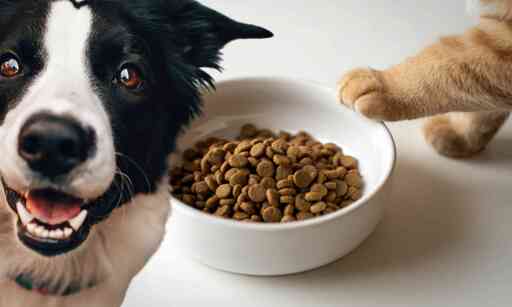
Scientists have found that widely sold dog and cat foods contain measurable levels of persistent industrial chemicals that accumulate through everyday feeding…
Industry has used PFAS, long-lasting fluorinated chemicals that resist breakdown, in coatings, packaging, and many water-repellent products.
Once they enter water or food, many PFAS stay intact and can collect in organs and blood over time.
For pets that eat similar meals every day, that persistence turns a trace contaminant into repeated exposure…
Fish-based formulas kept surfacing near the top, especially when labels pointed to whole fish, seafood, or fish byproducts.
That pattern matched what scientists already knew, because aquatic food webs can concentrate contaminants as smaller animals get eaten.
A review on human exposure found fish consumption was a major PFAS route long before this pet food survey…
When the team compared estimated intake with European safety benchmarks for people, several products crossed a warning line…
A daily bowl now looks less like a sealed consumer product and more like a map of wider environmental pollution.
That is why the next step is not alarm, but better testing of ingredients, clearer standards, and toxicology built for pets.
Alarming pet food study
That is why the next step is not alarm
…
Technically it makes sense: the paper is alarming, but we should not alarm. (But yeah, why call it “alarming” in the first place? Beats me!)
I mean it’s a pretty alarming sounding headline and I was alarmed until I read that it wasn’t such a big deal, anyways, I just thought it was humorous to be so blaise with the headline directly contradicting the article.
Standard market-competitive consequences. We are all lab-rats…
I bet lab rats consume less microplastics than we do.
dog and cat foods contain measurable levels of persistent industrial chemicals that accumulate through everyday feeding
Only really a problem for long-lived species (like humans, but not cats and dogs) and where the remains of the animal ends up.
I don’t know if there have been studies on it, but anecdotally, the diet of a pet can have a significant impact on its longevity – a matter of years.
If it’s true, it’s still probably multifaceted – there’ll be considerations like nutrition, likelihood of more general care for the animal, etc – but I’d speculate that harmful substances like PFAs seems like a likely factor.
First and foremost is - just like humans - refined carbs. Inflammation, cancer, diabetes, death. Most pet foods contain insane levels of refined carbs. If you put a cat on a food like Tiki that’s literally just seafood slurry, you can reverse many health problems, but it’s 10x the cost of kibble.
We need to get beyond feeding our animals the same ultraprocessed junk food we eat, and then we should absolutely be looking at this other stuff.
My cats have a water fountain with a plastic sponge pre-filter, as most have. I wonder about the microplastic generation in that all the time. Plus it’s a plastic fountain because the ceramic ones are also insanely expensive and do break.
selective editing by OP going on here.
Across 100 products sold in Japan
Industry has used PFAS, long-lasting fluorinated chemicals that resist breakdown, in coatings, packaging, and many water-repellent products.
US FDA banned PFAS use in food packaging in 2024, including for pet foods.
Meat-based foods usually ran lower, which pointed the finger at ingredients first and left packaging as a secondary suspect.