I mean, social media should be banned for everyone, not just teenagers. It’s a great evil in the world today, and in a functional democracy that wasn’t braindead, we should ban them outright for the mass harm and destruction they have caused.
That being said, I fully understand that the motivations of countries for these kinds of bans have little to do with the harm of social media and are much more about surveillance.
I agree, social media is harmful for all, no matter the age. We shouldn’t be destined to further segment and disfranchise individuals solely because they’re “inferior”, based on age or any other discriminatory factor - the thing is, who is the victim and who is the abuser in this case? Because the situation at hand seems like the victims are getting punished for the wrongdoings of the abuser.
This is where we are at, the corporations flipped the script, and we as a society gulped it all down, tightening the handcuffs around the wrong hands.
But besides the point, relating to the logic within your statement, who are you trying to ban here? Because you mention both “everyone” and “them” - which consequently makes it ambiguous, which introduces double meaning.
It’s so bonkers how most of the older generations agree that being on the internet cannot make you social, yet became the default method to communicate.
Ban it for everyone? I mean, lemmy itself is a social network platform, if you want it to be. But I know what you mean: social media being the most used platforms, Google, Facebook, Tik-Tok, etc . . . And for that, yeah, I do agree with a full ban. We need a cultural reset, where we aren’t being fed sensationalist bullshit and pure brainrot as entertainment via an algorithm trained on our insufficient capacity to regulate our attention.
In my view social media is probably not the problem, but the algorithms they use that are designed to be addictive and manipulative.
I saw an article once arguing that the algorithms should be regulated in a similar way to medicine. Give some base ingredients they can use freely (e.g. sort by newest first), then require any others to run studies to prove they are not harmful.
There would be an expert board that approves or declines the new algorithm in the same way medicines are approved today (the important bit being that they are experts, not politicians making the decision).
This is the correct response. Social media, as a construct, is not evil and dos not do harm to anyone. The commodification and commercialisation of social media by capitalistic companies is what has caused the harm we see today.
All of the harms and evils of social media can be boiled down to a single concept: the algorithm. Because algorithmic recommendation of content wants to encourage people to stay on a platform (for capitalistic reasons), and the most enticing and attention-grabbing content is hate-content, these companies have forced hate-inducing concepts down the throats of people in an endeavour to make more money and destroyed individuals and families/friends in the process.
If we regulate the algorithms, we regulate the harm without disempowering anyone. We can, and we should, regulate algorithms on social media to turn it back into what it was 20-odd years ago - a measure to keep in touch with people you know or care about.
Social media does cause harm. It tricks you into thinking you are socializing with those near you when you aren’t. It tricks you into thinking people are talking in good faith, similar to in person communication. Finally, social media is a huge attack vector for scams and abuse due to the anonymity and ability to connect anywhere in the world.
All of these things produce an overwhelmingly negative social experience from social media. That wouldn’t be a problem if our defining trait wasn’t how we socialize in groups. Socializing is as important as water and food for humans.
I wish I saw this kind of insightful point of view more often in the discourse over social media. It’s stopped being about being social once algorithmic content curation became the norm to drive engagement and advertising money which is the real evil.
I don’t think they are evil. A bunch of people with good intentions who didn’t understand the problem are trying to solve it with a gut feeling rather than analysis and evidence. It’s really disappoi ting that they would waste so much of our time and money like this.
Former Facebook higher ups have gone on the record to say the Facebook uses destructive algorithms to keep people hooked, they know exactly what they are doing and don’t care how it affects us as long as they can squeeze more info from us for more profit. Thinking Silicon Valley tech billionaires actually care about you? Bro, you need to wake up.
We’re talking about Australian legislation not social media itself. The problem is real, the legislation is ineffective and poorly implemented. Calling the legislation evil is a stretch. Modern social media is most certainly evil.
I didn’t say I approve of the current tactics, I’m just pointing out that circumstances can be more complex than simply saying ‘let the parents sort it out’ and leaving it at that.
If you set parental controls on your own teen’s device, all you’re doing is isolating them from their peers and making them the kid with the weird parent who doesn’t let them post on tik tok.
Social media isn’t what it was when we were growing up. It’s designed to prey on them the same way slot machines create gambling addictions.
I’m no puritan but I do truly believe banning kids from social media and restricting teens at a legislative level would be a net benefit for society. Same as alcohol or drugs.
Underage drinking is still more common than it should be, despite strict laws. The point is, it doesn’t do any good to go after the consumer, regardless of age. in order to make a meaningful impact, legislation would have to destroy or significantly neuter social media companies altogether, globally. Anything else will be a disappointment.
The more effective way to reduce these harms is through social/cultural change, but that’s easier said than done.
Underage drinking is still more common than it should be,
Sure, but it’s significantly lower than legal drinking.
We as a society acknowledge the harm of underage drinking so prohibition is effective. Prohibition of adult drinking was puritan bullshit the majority didn’t agree with so it didn’t work.
I think you’d find a majority of parents agree social media is shit, but they’re unwilling to isolate their child. In this case prohibition would be effective.
It will be effective if the prohibition takes the form of these companies no longer existing, at least in their current form, OR if the majority turn against them, making them irrelevant. An age gate won’t do anything, not on its own
There is a problem with social media addiction but the solution isn’t restricting teens from it. The solution, as with most things, is education. Educating the kids, educating their parents and making sure they both have the tools available to them to make smart decisions.
Surely there’s always time for both the kids and parents to set aside to learn every new technology and the appropriate controls to restrict them.
And when someone says it makes far more sense to just not give their kids said technology until they are older, we have people like you arguing on behalf of the technology.
Aww poor little facebook, we dont want to hurt its fee-fees! Let’s just give it another chance! I’m sure we can trust it this time if we just learn how to use it right!
How am I arguing on behalf of the technology? I want people to understand the technology so they know how to protect themselves effectively if they use it and so can make effective decisions on how their kids interact with it.
The technology sucks, but the technology is not going away and any fucking moron can bypass the age verification. If you think age verification is stopping teenagers from using tiktok then you’re an idiot. I’m arguing that the implemented solution is not in fact anything close to a solution, and that pulling this thread and trying to implement something in the same vein that would actually work is a terrible idea because it fucks the privacy of every Australian on the internet, even more so than the current solution.
Maybe, just maybe, parents shouldn’t let their kids in awful places, and also awful places shouldnt let kids in. Turns out parental controls are bullshit, and the only real answer is RTFM or dont use it at all. A business and its customers dont exist without each other, so the blame is on both sides.
All that said, the government definitely could help the parental understand and controls side of thing too using regulation.
That’s a bit like saying ‘there is a problem with smack/nicotine/alcohol addiction, but the solution is not restriction, it’s education’. You can educate all you want, but very clever people make a lot of money by saying ‘fuck your education’.
But we still prohibit children from having drugs. Legal drugs (alcohol, nicotine, cannabis) are illegal to sell to children, even though we can legally sell them to adults.
But the idea that we just need education is ridiculous. It’s the exact defence that the social media platforms espous, because they know it’s bullshit and ineffective.
Dunno, I’m not the one paid to come up with solutions. But, at the very least efforts like this teach kids that there is a problem. Like, yeah, we can easily circumvent the measures, but the gov still thinks it necessary to implement them.
Great examples include making people wait until adulthood to smoke nicotine or cannabis, or to drink alcohol.
I mean, I agree with you, but highschool is a thing… these laws are basically useless to my knowledge. I think about 50% of my grade had smoked weed by tenth grade, and half again were addicted to nicotine by 12th. The only reason I didn’t fall victim to those (as many of my friends did), is because I was educated, by my parents, from an early age, about addiction and these substances. I never even tried them, because I knew better, thus never got addicted.
You say that, but evidence shows its not a working solution. Its a piece of legislation that doesn’t actually achieve anything close to the desired outcome of stopping a significant number of people under 16 from accessing social media. Further than that, there isn’t an actual way to make this work without banning VPNs and implementing a Chinese style great internet filter.
Nicotine, Cannabis and alcohol are all banned in Australia for under 18s and you are kidding yourself if you think that has had any significant impact on stopping under 18s from getting their mits on them.
Well, thats what you get when non-tech people try to regulate tech. At least we have correctly identified a problem, and are now trying to solve it.
Tech companies taking advantage of regulators lack of knowledge to continue abusing their customers is a different problem.
This solution might not work but we will learn and try something else or refine it until it does work, or until social media somehow isn’t predatory and doesnt need the guard rails.
If the parental control comes from the social media site itself then it’s likely the parent that’s being controlled. The most important control is limiting screen time and not every site allows parents to set hard limits.
Good intentions without the spirit of cooperation or respect for consent is still evil.
The main problem with all of these internet surveillance tools being marketed as ways to protect children is that people are engaging with them on that basis.
As far as I’m concerned they haven’t done anything to establish that they actually intend to protect children or that this is a reasonable way to do it. This seems like a solution to a different problem that ignores all of the problems it creates.
Parents should be responsible for their children. A random website creator shouldn’t have to be responsible for your children.
Websites aren’t stores where people walk in off of a public street. They are services that people reach out to and engage with specifically and intentionally. If we can address the non-consensual non-intentionality part of internet tracking and surveillance a lot of this stuff goes away. So maybe rather than regulating the website to protect your children we should be regulating the website to protect consent.
I don’t agree that the legislators left the spirit of cooperation or respect for consent out because they are evil, I think they left them out because they are ignorant. I think they are inexperienced with both technology and social media and have failed to appropriately engage people that might have helped them come up with a functional solution rather than an ineffective brute force.
I do however agree with everything else you’ve said above.


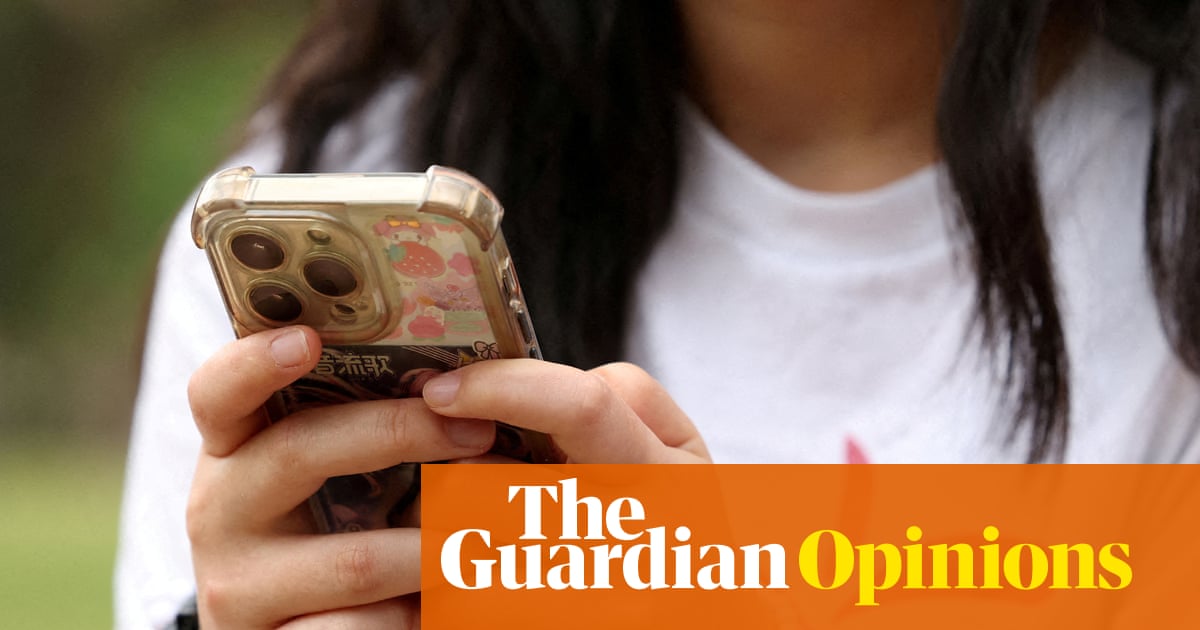
It was never designed to protect children
Glad to see it’s not even working. Let’s keep fighting aginst these evil laws
I mean, social media should be banned for everyone, not just teenagers. It’s a great evil in the world today, and in a functional democracy that wasn’t braindead, we should ban them outright for the mass harm and destruction they have caused.
That being said, I fully understand that the motivations of countries for these kinds of bans have little to do with the harm of social media and are much more about surveillance.
Do you realize you posted this very comment on social media ? Do you think they should ban the fediverse as well !?
Which type of social media are we referring to here?
Doesn’t Lemmy count as social media?
There’s a list of 10 or 12 social networks that are banned: YouTube, Instagram, TikTok, etc.
Lemmy is still legal.
Lemmy is legal because it’s too small for them to notice.
And YouTube is an incredible resource for finding information. It’s not social media at all.
Its also an incredible resource for finding misinformation and disinformation unfortunately.
To be fair YouTube Sharts is a thing
Given they have been clear they want you addicted then it counts. Their days of being information were long ago. It’s tat now.
I agree, social media is harmful for all, no matter the age. We shouldn’t be destined to further segment and disfranchise individuals solely because they’re “inferior”, based on age or any other discriminatory factor - the thing is, who is the victim and who is the abuser in this case? Because the situation at hand seems like the victims are getting punished for the wrongdoings of the abuser.
This is where we are at, the corporations flipped the script, and we as a society gulped it all down, tightening the handcuffs around the wrong hands.
But besides the point, relating to the logic within your statement, who are you trying to ban here? Because you mention both “everyone” and “them” - which consequently makes it ambiguous, which introduces double meaning.
It’s so bonkers how most of the older generations agree that being on the internet cannot make you social, yet became the default method to communicate.
Ban it for everyone? I mean, lemmy itself is a social network platform, if you want it to be. But I know what you mean: social media being the most used platforms, Google, Facebook, Tik-Tok, etc . . . And for that, yeah, I do agree with a full ban. We need a cultural reset, where we aren’t being fed sensationalist bullshit and pure brainrot as entertainment via an algorithm trained on our insufficient capacity to regulate our attention.
It’s not a generational war, it’s a class war.
This has nothing to do with “boomers”.
In my view social media is probably not the problem, but the algorithms they use that are designed to be addictive and manipulative.
I saw an article once arguing that the algorithms should be regulated in a similar way to medicine. Give some base ingredients they can use freely (e.g. sort by newest first), then require any others to run studies to prove they are not harmful.
There would be an expert board that approves or declines the new algorithm in the same way medicines are approved today (the important bit being that they are experts, not politicians making the decision).
This is the correct response. Social media, as a construct, is not evil and dos not do harm to anyone. The commodification and commercialisation of social media by capitalistic companies is what has caused the harm we see today.
All of the harms and evils of social media can be boiled down to a single concept: the algorithm. Because algorithmic recommendation of content wants to encourage people to stay on a platform (for capitalistic reasons), and the most enticing and attention-grabbing content is hate-content, these companies have forced hate-inducing concepts down the throats of people in an endeavour to make more money and destroyed individuals and families/friends in the process.
If we regulate the algorithms, we regulate the harm without disempowering anyone. We can, and we should, regulate algorithms on social media to turn it back into what it was 20-odd years ago - a measure to keep in touch with people you know or care about.
Social media does cause harm. It tricks you into thinking you are socializing with those near you when you aren’t. It tricks you into thinking people are talking in good faith, similar to in person communication. Finally, social media is a huge attack vector for scams and abuse due to the anonymity and ability to connect anywhere in the world.
All of these things produce an overwhelmingly negative social experience from social media. That wouldn’t be a problem if our defining trait wasn’t how we socialize in groups. Socializing is as important as water and food for humans.
I wish I saw this kind of insightful point of view more often in the discourse over social media. It’s stopped being about being social once algorithmic content curation became the norm to drive engagement and advertising money which is the real evil.
If you take such a broad definition of social media, then nearly the entire Internet becomes “social media” and the term loses its meaning, IMO.
I don’t think they are evil. A bunch of people with good intentions who didn’t understand the problem are trying to solve it with a gut feeling rather than analysis and evidence. It’s really disappoi ting that they would waste so much of our time and money like this.
Former Facebook higher ups have gone on the record to say the Facebook uses destructive algorithms to keep people hooked, they know exactly what they are doing and don’t care how it affects us as long as they can squeeze more info from us for more profit. Thinking Silicon Valley tech billionaires actually care about you? Bro, you need to wake up.
We’re talking about Australian legislation not social media itself. The problem is real, the legislation is ineffective and poorly implemented. Calling the legislation evil is a stretch. Modern social media is most certainly evil.
The “good intention” was the packaging. The real intent was population control.
The packaging was just a taster for what’s to come, I.e. discrimination leading to fascism.
There is no problem to solve that hasn’t already been addressed with parental controls.
The issue with this argument is that many kids don’t have good parents, and some don’t have any parents at all.
Are those kids just supposed to be left to the mercy of bad actors because of their circumstances?
The current solution just cuts those at risk kids off from all modern support networks.
On purporse to keep them trapped in abusive households with no Support
Guess we just let for profit companies and authoritarian states suck up all the data on everyone whether it works or not then.
I didn’t say I approve of the current tactics, I’m just pointing out that circumstances can be more complex than simply saying ‘let the parents sort it out’ and leaving it at that.
If you set parental controls on your own teen’s device, all you’re doing is isolating them from their peers and making them the kid with the weird parent who doesn’t let them post on tik tok.
Social media isn’t what it was when we were growing up. It’s designed to prey on them the same way slot machines create gambling addictions.
I’m no puritan but I do truly believe banning kids from social media and restricting teens at a legislative level would be a net benefit for society. Same as alcohol or drugs.
Prohibition didn’t work for drugs either, so why would it work here? Why do we need to learn that lesson over and over again?
I didn’t realize it was common for 14 year olds to drink alcohol and take heroin where you’re from…
Underage drinking is still more common than it should be, despite strict laws. The point is, it doesn’t do any good to go after the consumer, regardless of age. in order to make a meaningful impact, legislation would have to destroy or significantly neuter social media companies altogether, globally. Anything else will be a disappointment.
The more effective way to reduce these harms is through social/cultural change, but that’s easier said than done.
Sure, but it’s significantly lower than legal drinking.
We as a society acknowledge the harm of underage drinking so prohibition is effective. Prohibition of adult drinking was puritan bullshit the majority didn’t agree with so it didn’t work.
I think you’d find a majority of parents agree social media is shit, but they’re unwilling to isolate their child. In this case prohibition would be effective.
It will be effective if the prohibition takes the form of these companies no longer existing, at least in their current form, OR if the majority turn against them, making them irrelevant. An age gate won’t do anything, not on its own
lol are you serious
Limiting total time spent on something is one of the parental control options. It isn’t just blocking things 100%.
“I only let my child smoke crack 3 hours a day”
There is a problem with social media addiction but the solution isn’t restricting teens from it. The solution, as with most things, is education. Educating the kids, educating their parents and making sure they both have the tools available to them to make smart decisions.
Surely there’s always time for both the kids and parents to set aside to learn every new technology and the appropriate controls to restrict them.
And when someone says it makes far more sense to just not give their kids said technology until they are older, we have people like you arguing on behalf of the technology.
Aww poor little facebook, we dont want to hurt its fee-fees! Let’s just give it another chance! I’m sure we can trust it this time if we just learn how to use it right!
How am I arguing on behalf of the technology? I want people to understand the technology so they know how to protect themselves effectively if they use it and so can make effective decisions on how their kids interact with it.
The technology sucks, but the technology is not going away and any fucking moron can bypass the age verification. If you think age verification is stopping teenagers from using tiktok then you’re an idiot. I’m arguing that the implemented solution is not in fact anything close to a solution, and that pulling this thread and trying to implement something in the same vein that would actually work is a terrible idea because it fucks the privacy of every Australian on the internet, even more so than the current solution.
Maybe, just maybe, parents shouldn’t let their kids in awful places, and also awful places shouldnt let kids in. Turns out parental controls are bullshit, and the only real answer is RTFM or dont use it at all. A business and its customers dont exist without each other, so the blame is on both sides.
All that said, the government definitely could help the parental understand and controls side of thing too using regulation.
That’s a bit like saying ‘there is a problem with smack/nicotine/alcohol addiction, but the solution is not restriction, it’s education’. You can educate all you want, but very clever people make a lot of money by saying ‘fuck your education’.
Drug prohibition has also historically not worked out very well for anyone except prison industry shareholders
But we still prohibit children from having drugs. Legal drugs (alcohol, nicotine, cannabis) are illegal to sell to children, even though we can legally sell them to adults.
You can’t download weed with a phone, not a good comparison
Restriction is fine if it’s a workable solution, but this one is not and anyone with half a brain could see that from its very first announcement.
But the idea that we just need education is ridiculous. It’s the exact defence that the social media platforms espous, because they know it’s bullshit and ineffective.
What’s your solution then? Great Chinese internet filter and banning VPNs?
Dunno, I’m not the one paid to come up with solutions. But, at the very least efforts like this teach kids that there is a problem. Like, yeah, we can easily circumvent the measures, but the gov still thinks it necessary to implement them.
You can’t educate someone out of an addiction. That’s a fundamental misunderstanding about addiction…
No but you can educate their support networks and build other systems to help them work through their addiction.
Or we could focus on preventing the addiction to begin with.
Great examples include making people wait until adulthood to smoke nicotine or cannabis, or to drink alcohol.
I mean, I agree with you, but highschool is a thing… these laws are basically useless to my knowledge. I think about 50% of my grade had smoked weed by tenth grade, and half again were addicted to nicotine by 12th. The only reason I didn’t fall victim to those (as many of my friends did), is because I was educated, by my parents, from an early age, about addiction and these substances. I never even tried them, because I knew better, thus never got addicted.
You say that, but evidence shows its not a working solution. Its a piece of legislation that doesn’t actually achieve anything close to the desired outcome of stopping a significant number of people under 16 from accessing social media. Further than that, there isn’t an actual way to make this work without banning VPNs and implementing a Chinese style great internet filter.
Nicotine, Cannabis and alcohol are all banned in Australia for under 18s and you are kidding yourself if you think that has had any significant impact on stopping under 18s from getting their mits on them.
Well, thats what you get when non-tech people try to regulate tech. At least we have correctly identified a problem, and are now trying to solve it.
Tech companies taking advantage of regulators lack of knowledge to continue abusing their customers is a different problem.
This solution might not work but we will learn and try something else or refine it until it does work, or until social media somehow isn’t predatory and doesnt need the guard rails.
Limiting total time spent on something is one of the parental control options. It isn’t just blocking things 100%.
Just having parental controls exist isn’t an effective solution. Well implemented education is required to ensure it is used effectively.
If the parental control comes from the social media site itself then it’s likely the parent that’s being controlled. The most important control is limiting screen time and not every site allows parents to set hard limits.
And those guys are being led on by the evils.
Sounds like a conspiracy theory.
https://agelesslinux.org/citations.html
https://en.wikipedia.org/wiki/Hanlon's_razor
Good intentions without the spirit of cooperation or respect for consent is still evil.
The main problem with all of these internet surveillance tools being marketed as ways to protect children is that people are engaging with them on that basis.
As far as I’m concerned they haven’t done anything to establish that they actually intend to protect children or that this is a reasonable way to do it. This seems like a solution to a different problem that ignores all of the problems it creates.
Parents should be responsible for their children. A random website creator shouldn’t have to be responsible for your children.
Websites aren’t stores where people walk in off of a public street. They are services that people reach out to and engage with specifically and intentionally. If we can address the non-consensual non-intentionality part of internet tracking and surveillance a lot of this stuff goes away. So maybe rather than regulating the website to protect your children we should be regulating the website to protect consent.
I don’t agree that the legislators left the spirit of cooperation or respect for consent out because they are evil, I think they left them out because they are ignorant. I think they are inexperienced with both technology and social media and have failed to appropriately engage people that might have helped them come up with a functional solution rather than an ineffective brute force.
I do however agree with everything else you’ve said above.