
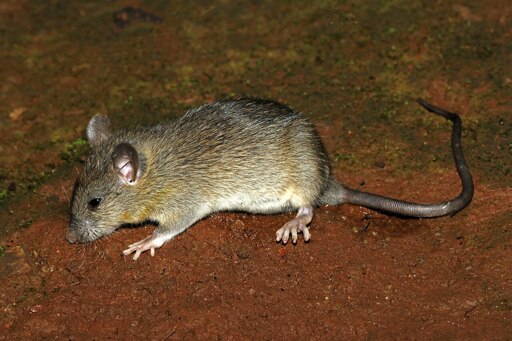
- Genus name: Rattus
- Species name: rattus
- Subspecies name: rattus
You’d actually say it as R. rattus rattus or Rattus r. rattus.
Saying its name trice is a summoning chant, which may have worked a bit too well. You should check your house just in case.
Rattus R. Rattus has some real Chuck E. Cheese energy.
Rattus R. Rattus is his wealthy, British cousin.
Similarly, the Eurasian Brown Bear is Ursus Arctos Arctos (U. a. arctos) which just means Bear Bear Bear in Latin and Ancient Greek, respectively 😄
The rat so nice they named it thrice!
Rat in a dollhouse always cheers me up: https://www.youtube.com/watch?v=1bYbLv20Q0I
This seems like a fact that John Oliver would bring up.
Once. Twice. Three times a rattus.
If this isn’t yet a death metal song, it should be.
Rat3
Rat cubed.
Rattus Norvegus (common brown rat) was named by that Norwegian Linnaeus guy who came up with the Latin naming scheme for species. They are not particularly Norwegian actually.
A. The common brown rat is named Rattus norvegicus
B. Carl Linneaus was Swedish (born in Råshult, near Älmhult, Krononberg County, Småland; died in Hammarby).
C. Your rattus norvegicus was named so by John Berkenhout (English, born in Leeds), who believed the rats migrated to England from Norwegian ships in 1728. (Source: Berkenhout, John (1769). Outlines of the Natural History of Great Britain and Ireland, Vol. 1. London: Printed for P. Elmsly (Successor to Mr. Vaillant). p. 5.)
How dare you say he’s Norwegian! Those mountain trolls could never spawn someone of such greatness! Next you’ll tell me Anders Celsius was Danish, pwah.
Sweden had some good ones. Schele is my favourite. If you are a chemist tasting stuff to identify properties is a bad idea.
As a Norwegian myself I like Kristian Birkeland who in order to fund his aurora borealis research invented the Birkeland-Eyde process of fixing nitrogen from the air. Thereby enabeling the mass production of fertilizer
If you are a chemist tasting stuff to identify properties is a bad idea.
I was appalled, reading through these:
1879:
“How did I discover saccharine?” he said. "Well, it was partly by accident and partly by study. I had worked a long time upon the compound radicals and a substitution products of coal tar, and had made a number of scientific discoveries that are, as far as I know, of no commercial value. One evening I was so interested in my laboratory that I forgot about supper until quite late, and then rushed off for a meal without stopping to wash my hands. I sat down, broke a piece of bread, and put it to my lips. I tasted unspeakably sweet. I did not ask why it was so, probably because I thought it was some cake or sweetmeat. I rinsed my mouth with water, and dried my mustached with my napkin, when, to my surprise, the napkin tasted sweeter than the bread. Then I was puzzled. I again raised my goblet, and, as fortune would have it, applied my mouth where my fingers had touched it before. The water seemed sirup. It flashed upon me that I was the cause of the singular universal sweetness, and I accordingly tasted the end of my thumb, and found that it surpassed any confectionary I had ever eaten. I saw the whole thing at a glance. I had discovered or made some coal tar substance which out-sugared sugar. I dropped my dinner and ran back to the laboratory. There, in my excitement, I tasted the contents of every beaker and evaporating dish on the table. Luckily for me, non contained any corrosive or poisonous liquid.
“One of them contained an impure solution of saccharine…”
1965:
https://en.wikipedia.org/wiki/Aspartame#History
Aspartame was discovered by accident[60] in December 1965[61] by James M. Schlatter, a chemist working for G.D. Searle & Company in Skokie, Illinois. Schlatter had synthesized aspartame as an intermediate step in generating a tetrapeptide of the hormone gastrin, for use in assessing an anti-ulcer drug candidate.[60] He discovered its sweet taste when he licked his finger, which had become contaminated with aspartame, to lift up a piece of paper.[12][62]
1967:
https://en.wikipedia.org/wiki/Acesulfame_potassium#Discovery
Acesulfame potassium was developed after the accidental discovery of a similar compound (5,6-dimethyl-1,2,3-oxathiazin-4(3H)-one 2,2-dioxide) in 1967 by Karl Clauss and Harald Jensen at Hoechst AG.[16][17] After some of the chemical powder accidentally spilled onto his sweater, Clauss licked his finger to wipe the spots away, which led him to notice its intensely sweet taste.[18][19]
1975:
https://en.wikipedia.org/wiki/Sucralose
Sucralose was discovered in 1975 by scientists from Tate & Lyle, working with researchers Leslie Hough and Shashikant Phadnis at Queen Elizabeth College (now part of King’s College London).[21] While researching novel uses of sucrose and its synthetic derivatives, mixing sulfuryl chloride with sugar, Phadnis was told to “test” a chlorinated sugar compound. According to an anecdotal account, Phadnis thought Hough asked him to “taste” it, so he did and found the compound to be exceptionally sweet.[22][23]
Offhand I think that be the case for every/most type species.
Not nearly, actually! Tautonyms are pretty uncommon, all things considered. Trinomial tautonyms even less so, like Bison bison bison. I don’t think I can give you actual data, but I can say knowing a fair bit of marine taxonomy that it’s the exception there.
Edit: It’s also prohibited in botany and, I learned today, used to be prohibited for bacteria.
Edit 2: [Wikipedia maintains an incomplete list](Trinomial tautonyms even less so, like Bison bison bison.), incidentally, of ones for which articles exist.
Does Homo Sapiens Sapiens count here?
Mus musculus was the one I was thinking of. The -culus is just the diminutive suffix.
Vulpes vulpes vulpes is another one
$ wget https://www.itis.gov/downloads/itisMySQLTables.tar.gz $ unp -U itisMySQLTables.tar.gz $ cd itisMySQL072826 $ cut -d'|' -f2 longnames|grep -iE '^([^ ]+) \1 \1$' Porites porites porites Volva volva volva Modiolus modiolus modiolus Quadrula quadrula quadrula Arcinella arcinella arcinella Echiurus echiurus echiurus Sprattus sprattus sprattus Lepadogaster lepadogaster lepadogaster Pungitius pungitius pungitius Caretta caretta caretta Puffinus puffinus puffinus Sula sula sula Anhinga anhinga anhinga Nycticorax nycticorax nycticorax Lagopus lagopus lagopus Perdix perdix perdix Limosa limosa limosa Alle alle alle Apus apus apus Riparia riparia riparia Troglodytes troglodytes troglodytes Cardinalis cardinalis cardinalis Coccothraustes coccothraustes coccothraustes Pyrrhula pyrrhula pyrrhula Carduelis carduelis carduelis Pica pica pica Oenanthe oenanthe oenanthe Ciconia ciconia ciconia Bison bison bison Clelia clelia clelia Phocoena phocoena phocoena Gulo gulo gulo Hyaena hyaena hyaena Nasua nasua nasua Belone belone belone Lerwa lerwa lerwa Francolinus francolinus francolinus Coturnix coturnix coturnix Gallus gallus gallus Crossoptilon crossoptilon crossoptilon Zungaro zungaro zungaro Bubo bubo bubo Amazilia amazilia amazilia Coeligena coeligena coeligena Porphyrio porphyrio porphyrio Grus grus grus Manacus manacus manacus Pipra pipra pipra Suiriri suiriri suiriri Anser anser anser Pauxi pauxi pauxi Gallinago gallinago gallinago Caracal caracal caracal Lynx lynx lynx Genetta genetta genetta Vulpes vulpes vulpes Lutra lutra lutra Martes martes martes Meles meles meles Mephitis mephitis mephitis Icterus icterus icterus Curaeus curaeus curaeus Melanodera melanodera melanodera Diuca diuca diuca Nyctelius nyctelius nyctelius Buteo buteo buteo Cochlearius cochlearius cochlearius Jacana jacana jacana Milvus milvus milvus Chinchilla chinchilla chinchilla Tibicen tibicen tibicen Avicularia avicularia avicularia Alces alces alces Capreolus capreolus capreolus Dama dama dama Gazella gazella gazella Oreotragus oreotragus oreotragus Rupicapra rupicapra rupicapra Redunca redunca redunca Quelea quelea quelea Regulus regulus regulus Tchagra tchagra tchagra Phoenicurus phoenicurus phoenicurus Petronia petronia petronia Cinclus cinclus cinclus Pyrrhocorax pyrrhocorax pyrrhocorax Amandava amandava amandava Petaurista petaurista petaurista Marmota marmota marmota Hoolock hoolock hoolock Gorilla gorilla gorilla Indri indri indri Pithecia pithecia pithecia Saccolaimus saccolaimus saccolaimus Molossus molossus molossus Pipistrellus pipistrellus pipistrellus Myotis myotis myotis Chitra chitra chitra Microchaetus microchaetus microchaetus Chloris chloris chloris Giraffa giraffa giraffa Basiliscus basiliscus basiliscus Cerastes cerastes cerastes Natrix natrix natrix Astacus astacus astacus Colius colius colius Chalcides chalcides chalcides Scincus scincus scincus Schoeniclus schoeniclus schoeniclus Radjah radjah radjah Himantopus himantopus himantopus Antigone antigone antigone Pyrope pyrope pyrope Curruca curruca curruca Bufo bufo bufo Vicugna vicugna vicugna Erythrogenys erythrogenys erythrogenys $Bison bison bison
Oh sweet buttery Jesus yes.
https://en.wikipedia.org/wiki/Buffalo_buffalo_Buffalo_buffalo_buffalo_buffalo_Buffalo_buffalo
Buffalo buffalo Buffalo buffalo buffalo buffalo Buffalo buffalo.
to
Buffalo Bison bison bison Buffalo Bison bison bison buffalo buffalo Buffalo Bison bison bison.
Colleagues must think im crying on the toilet but I’m trying to silently laugh tears. Thank you.
Nice grep command
Am I blind or is that list missing r. r. rattus?
double checks
It’s not in there. Could be that the subspecies classification was recent or undone or controversial or something?
Crucially, I forgot to note the taxonomist who described it:

Also, the scientific name of the Western lowland gorilla is gorilla gorilla gorilla. You’d say it as G. g. gorilla.
The GGG
The OG